Plaza de Mulas: The Definitive Guide to Aconcagua Base Camp
The Giant of the Andes: More Than Just a Base Camp
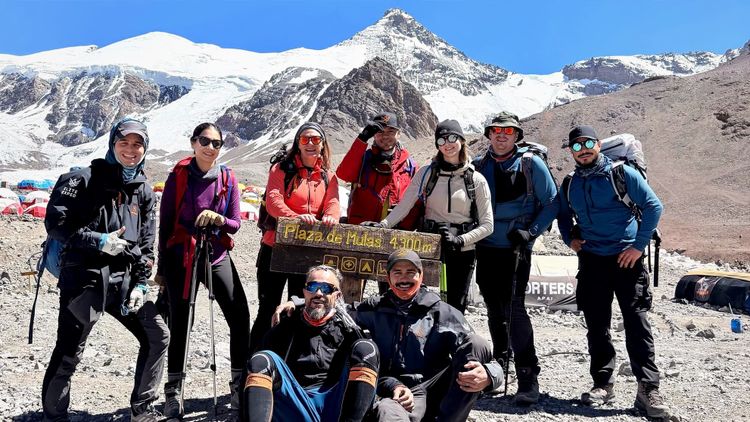
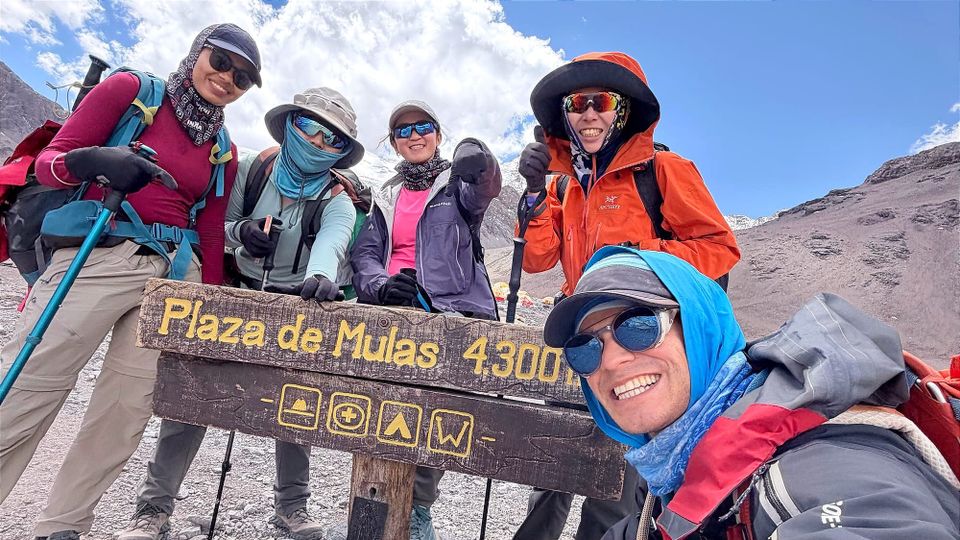
Plaza de Mulas is not merely a resting point; it is the true heartbeat of Aconcagua Provincial Park. Situated at an altitude of 14,108 feet (4,300 meters), this rocky plateau is world-renowned as one of the largest base camps on the planet, competing neck and neck for the title of the second largest in the world.
During the peak of the high season, this iconic "tent city" takes on a life of its own, reaching a capacity of nearly 1,000 mountaineers and support staff at any one time. From here, expedition members from all corners of the globe meticulously plan their strategies, share mountaineering camaraderie, and prepare mentally and physically before undertaking the relentless ascent toward the summit of the Sentinel of Stone via the Normal Route.
Plaza de Mulas Technical Fact Sheet
| Parameter | Technical Details |
|---|---|
| Name | Plaza de Mulas Base Camp |
| Altitude | 14,108 ft / 4,300 m a.s.l. |
| GPS Location | -32.64909726813453, -70.05760533208426 |
| Distance (From Horcones) | 4.3 miles (Horcones to Confluencia) + 11.2 miles (Confluencia to Mulas) |
| Average Trekking Time | 3h (Horcones to Confluencia) + 8h to 9h (Confluencia to Mulas) |
Logistics, Services and Approach
The Approach Trek
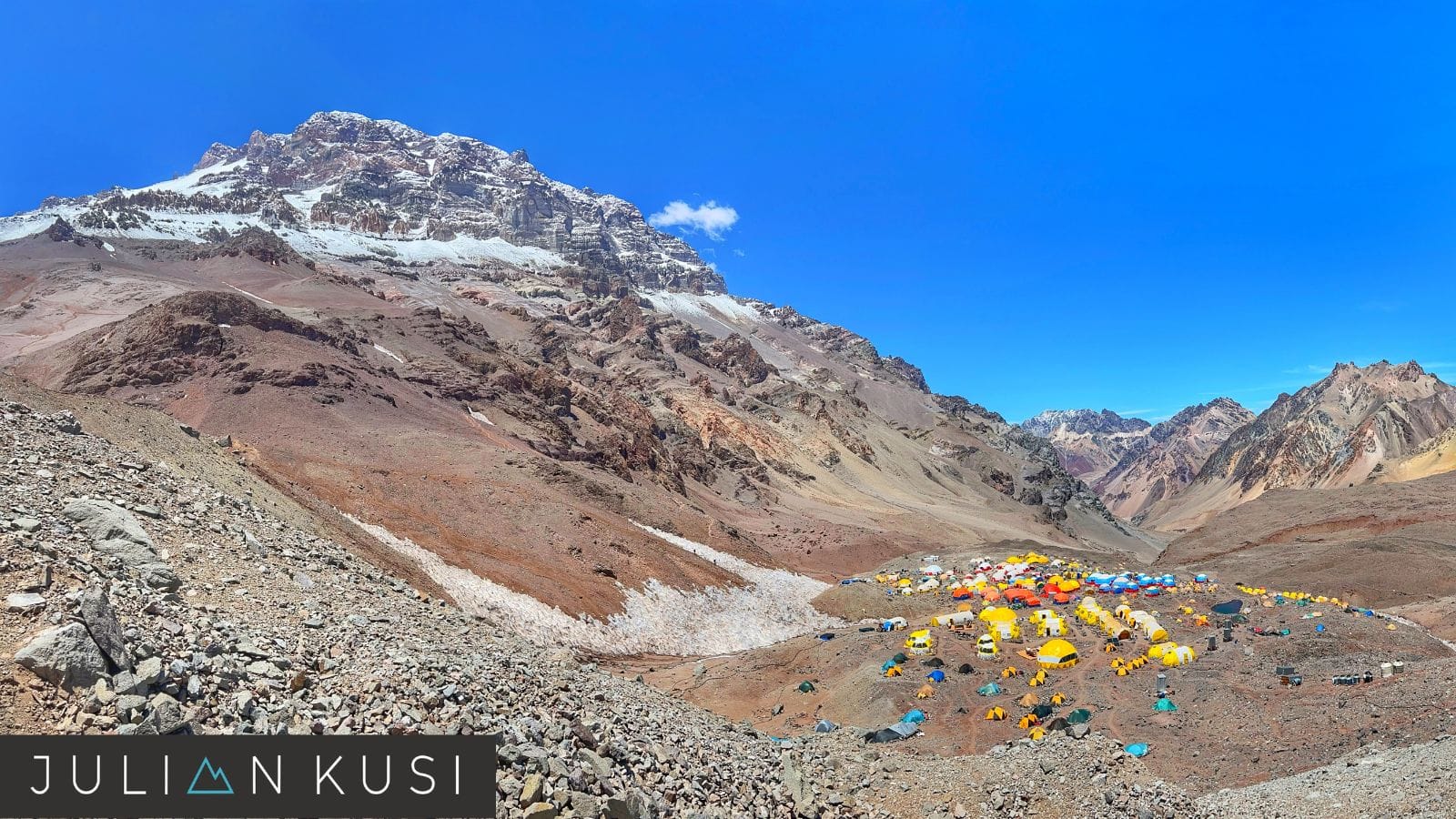
Unlike the rugged atmosphere of Plaza Argentina on the 360 Route, Plaza de Mulas stands out for its enormous operational infrastructure. Working as a guide, I constantly see how the centralization of services here makes the difference: spacious dining domes, high-altitude medical services (with mandatory acclimatization checks), satellite internet, and hot showers all converge here.
To reach this oasis, the approach trek requires strategy. Starting from the Horcones area, the first leg is 4.5 miles (7.3 km) to Confluencia camp (11,154 ft / 3,400 m), which takes about 3 hours. Then, the challenging 11.2-mile (18 km) stretch awaits through Playa Ancha and the Cuesta Brava toward Mulas, which demands between 8 and 9 hours of hiking.
The secret to success dictates that this total journey should be completed in approximately 3 days. The mandatory two-night stop at Confluencia is vital for the acclimatization process. Technically, if a mountaineer were already perfectly acclimatized, they could complete the entire journey in a single, grueling effort, but the golden rule in the mountains is patience. Additionally, to conserve energy, heavy transport is carried out by the noble work of the mules, although there are always purists who choose to carry all their own gear.
Culture and Mystery at 14,108 ft (4,300 meters)
Plaza de Mulas is not just stone, ice, and tents; it holds fascinating landmarks that break the monotony of the high mountains.
Nautilus: The Highest Art Gallery in the World
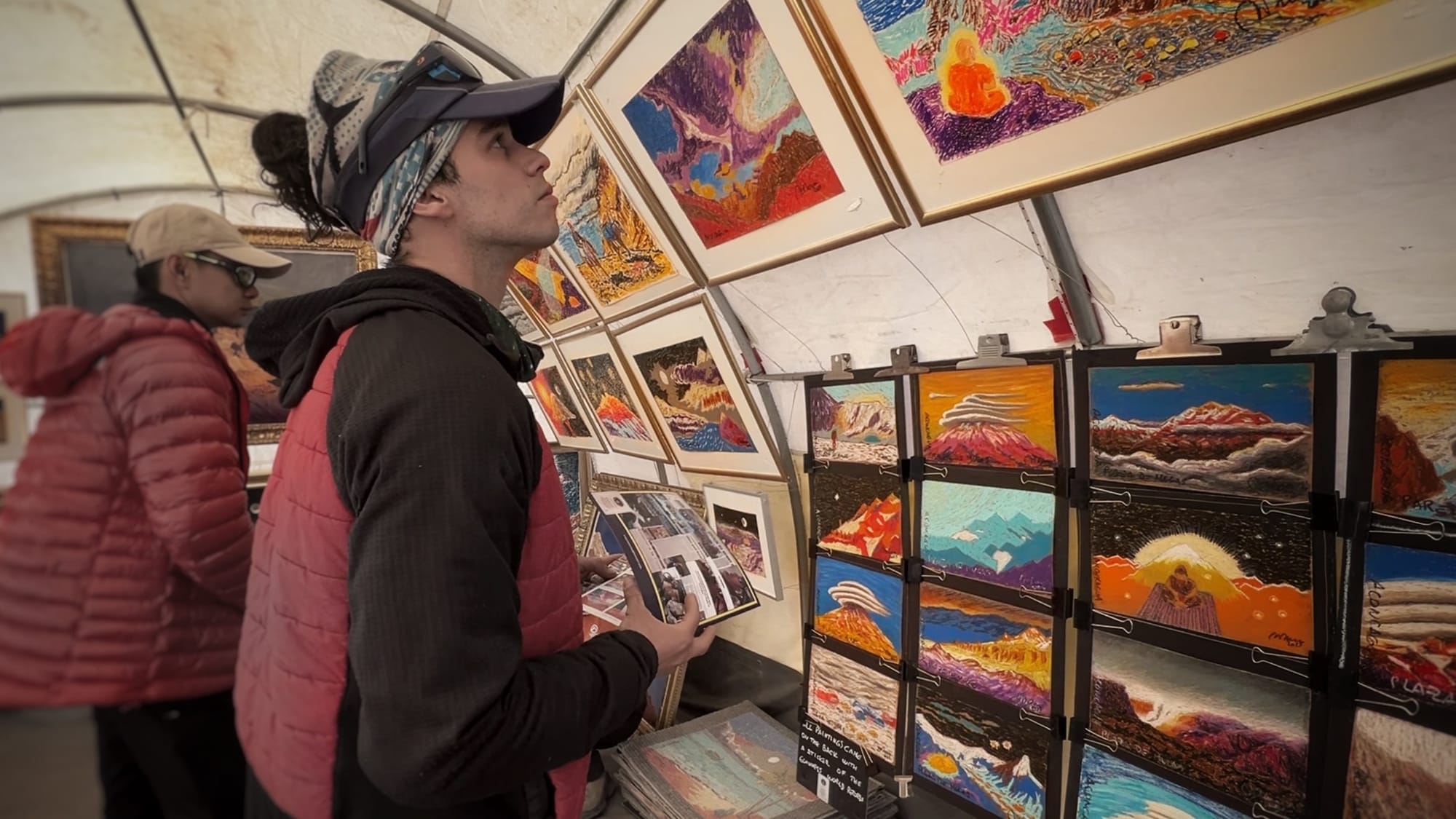
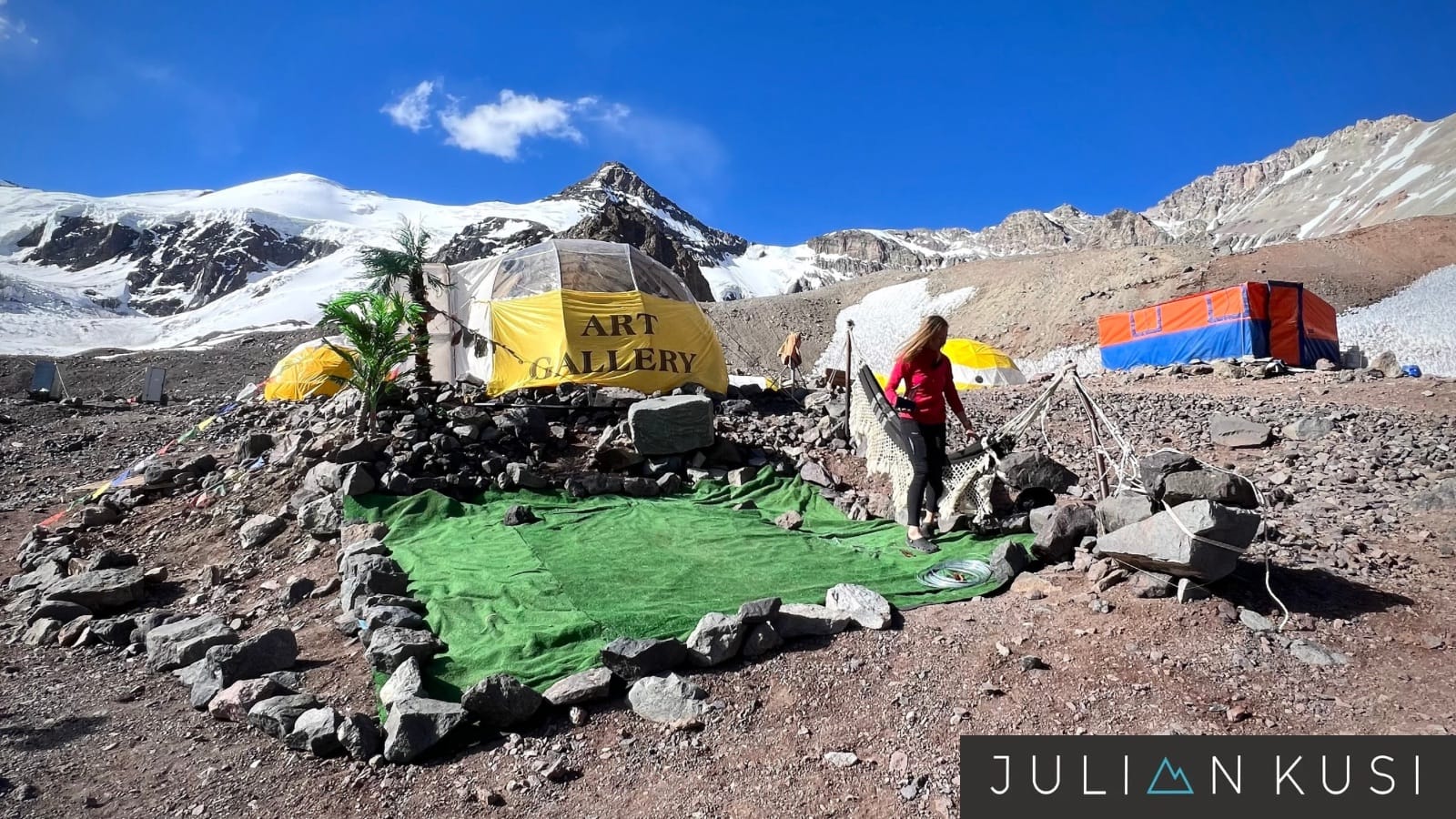
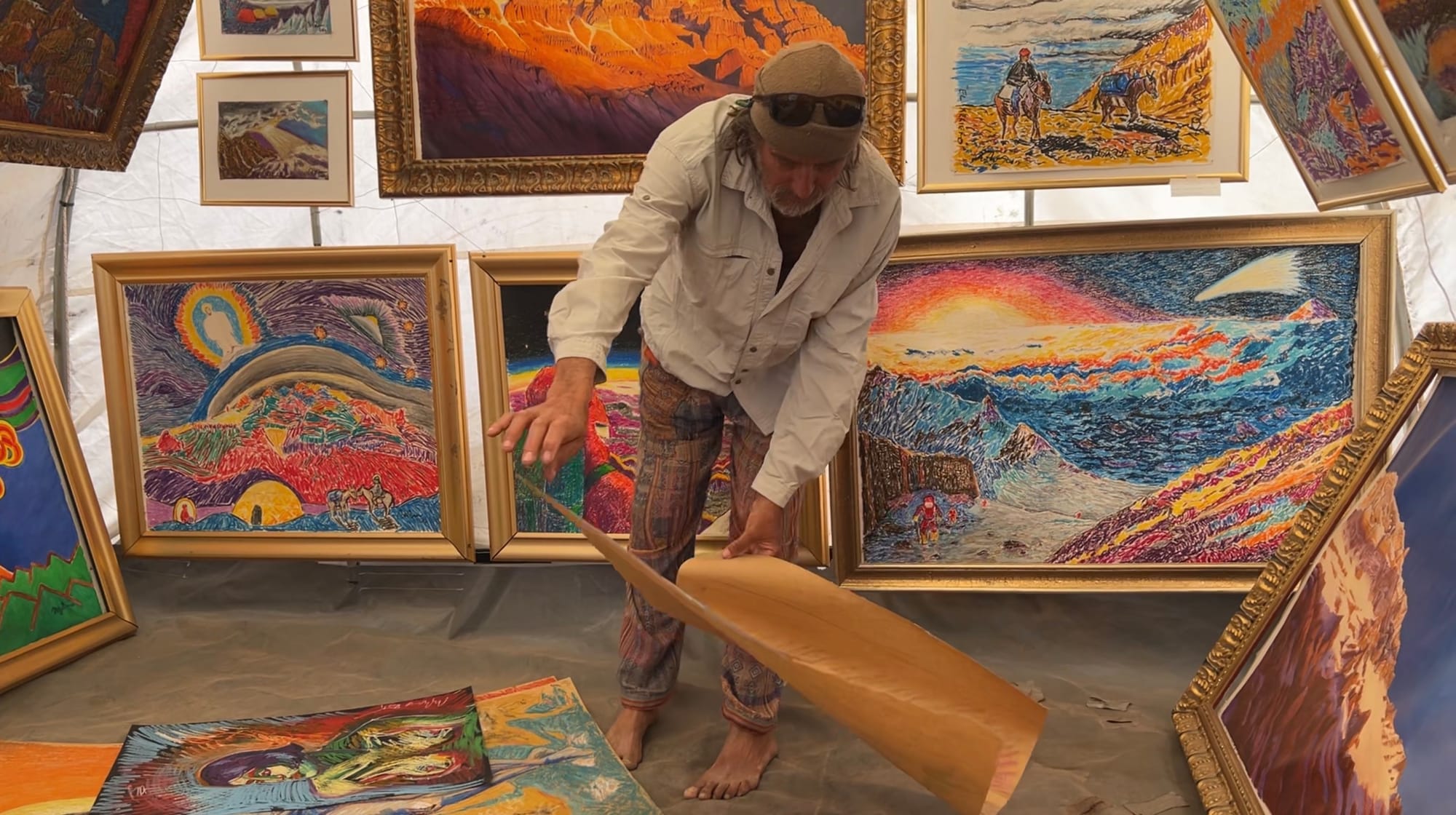
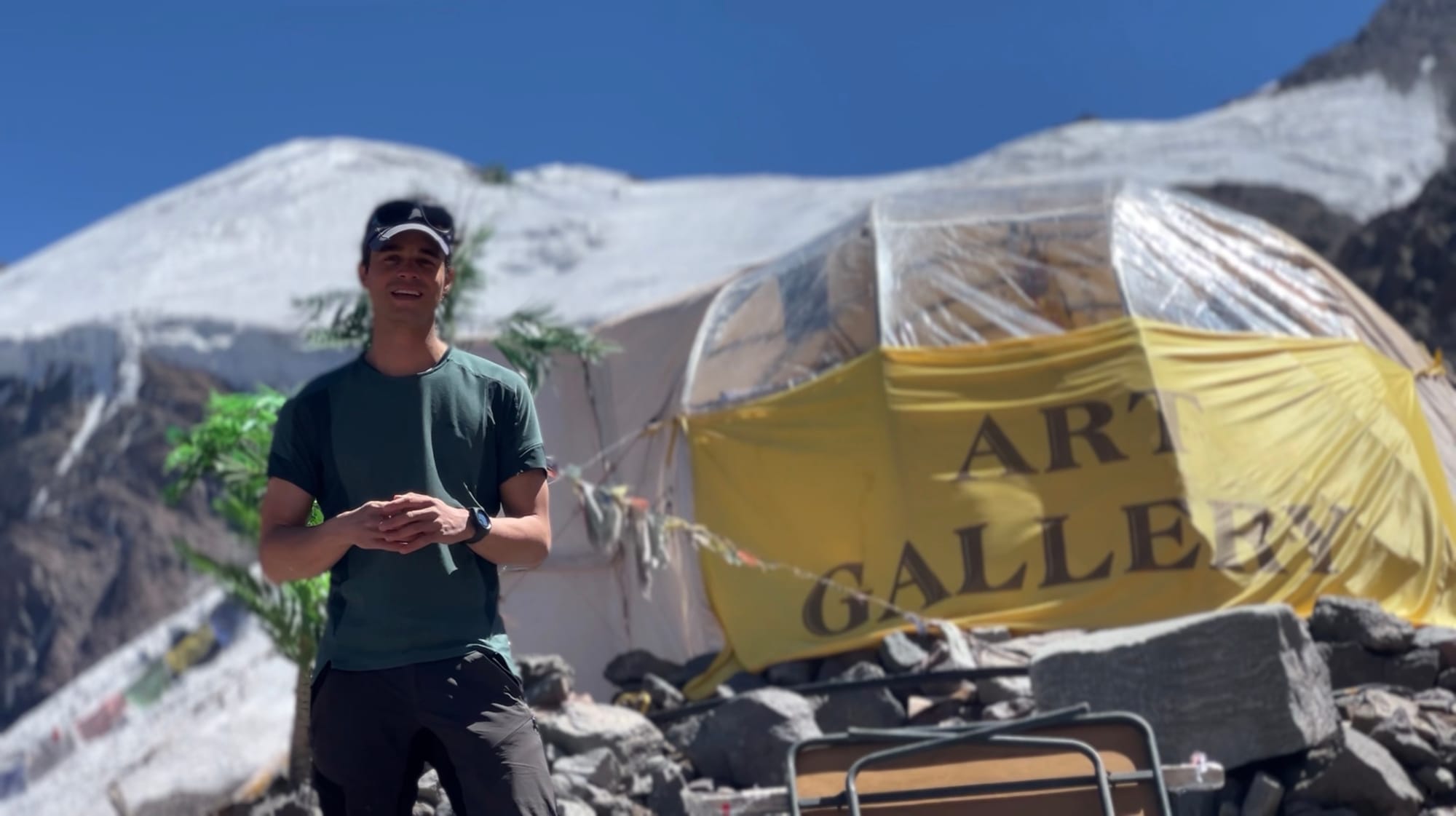
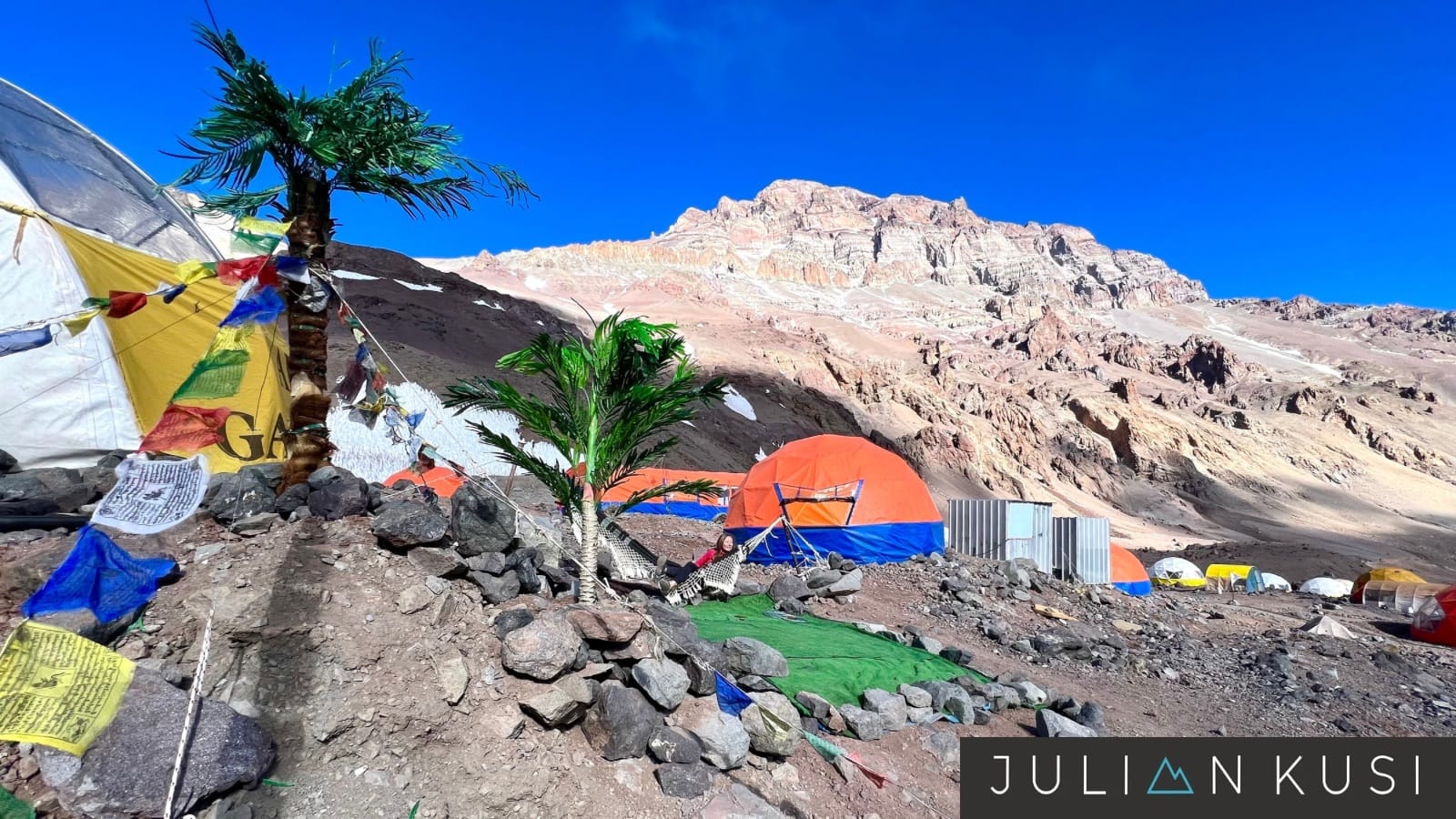
Aconcagua’s art gallery
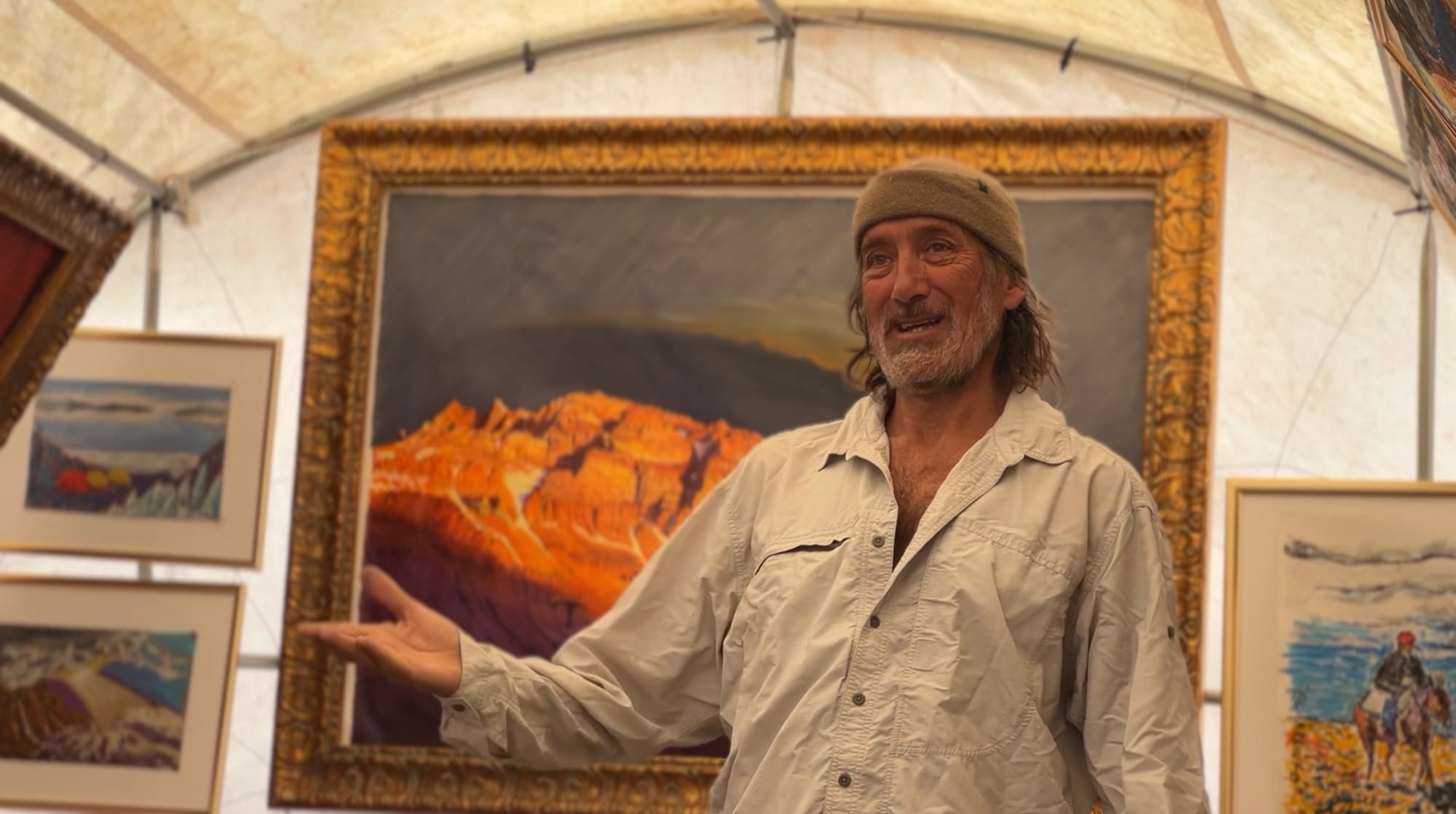
In the middle of the arid landscape of Plaza de Mulas, at an altitude of about 13,780 ft (4,200 meters), you will encounter a completely surreal scene: palm trees protruding from the top, accompanying an unusual submarine-shaped tent and a weather station with its anemometer spinning non-stop. This is Nautilus, officially recognized as the highest art gallery in the world. Led by artist Miguel Doura, this tent is a cultural refuge where paintings inspired by the majesty of Aconcagua are exhibited. In addition to enjoying and being able to purchase unique works, the space offers an outdoor area with a hammock, creating an unmatched atmosphere of beach, relaxation, and art at high altitude.
The "Ghost" of Plaza de Mulas: The Abandoned Hotel
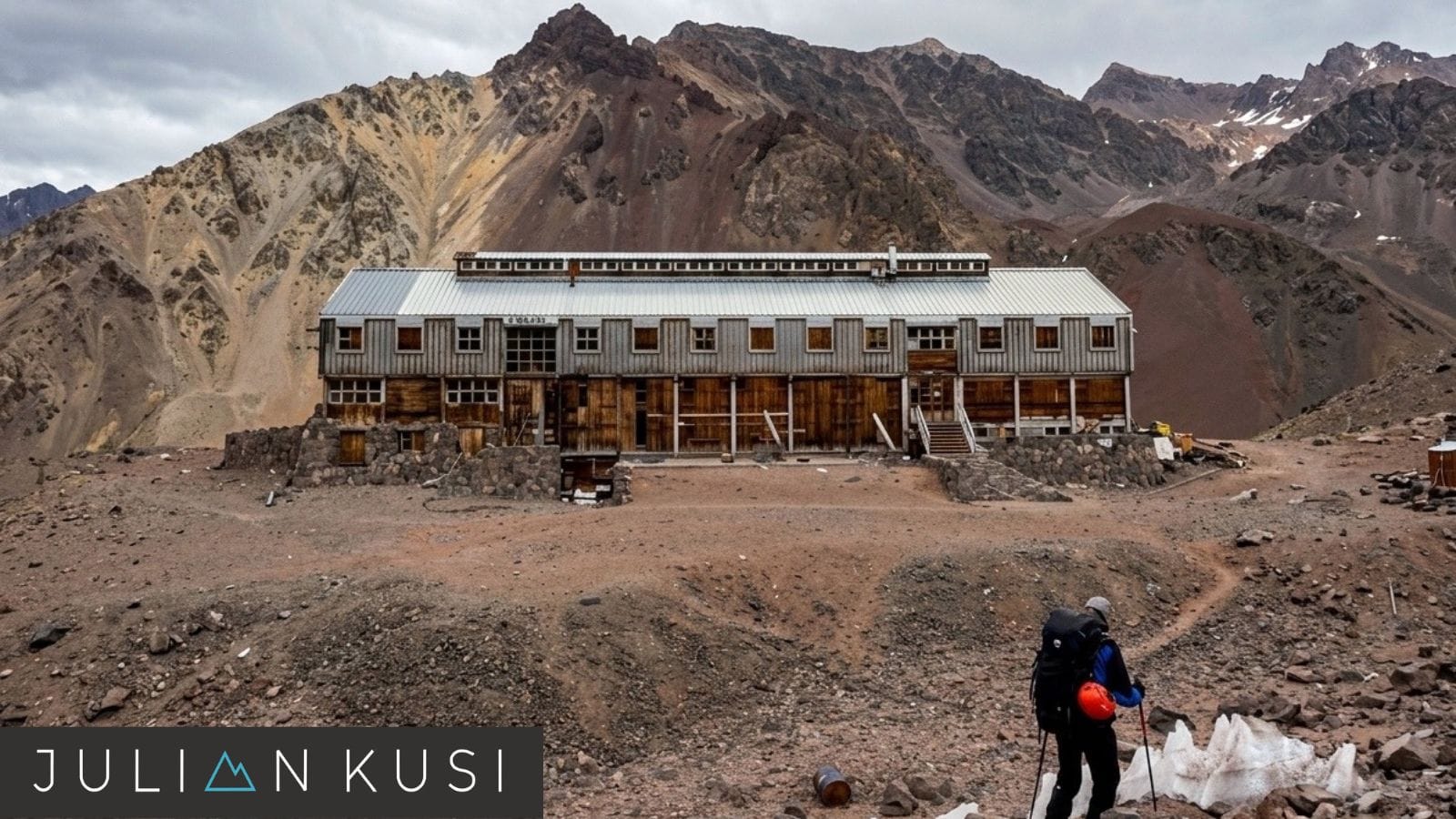
A few meters higher, at 14,337 ft (4,370 meters) above sea level, lies the imposing skeleton of the former Plaza de Mulas Hotel Refugio. Inaugurated in the 90s as a luxury high-mountain project, today it is a concrete "fossil" that closed its doors permanently around 2009. Its failure is a brutal lesson on the supremacy of nature:
Why did the Plaza de Mulas hotel close?
Logistics and Hydration
Bathrooms with running water were collapsing because, at -20°C, the pipes were systematically exploding.
Energy Cost
Heating the structure required transporting gas by mule or helicopter, something economically unsustainable.
Thermal amplitude
The extreme temperature difference between day and night ruined the materials. In the Andes, the adaptability of a tent will always prevail over the rigidity of urban architecture.
The Long Trek: The Alternative to the Summit
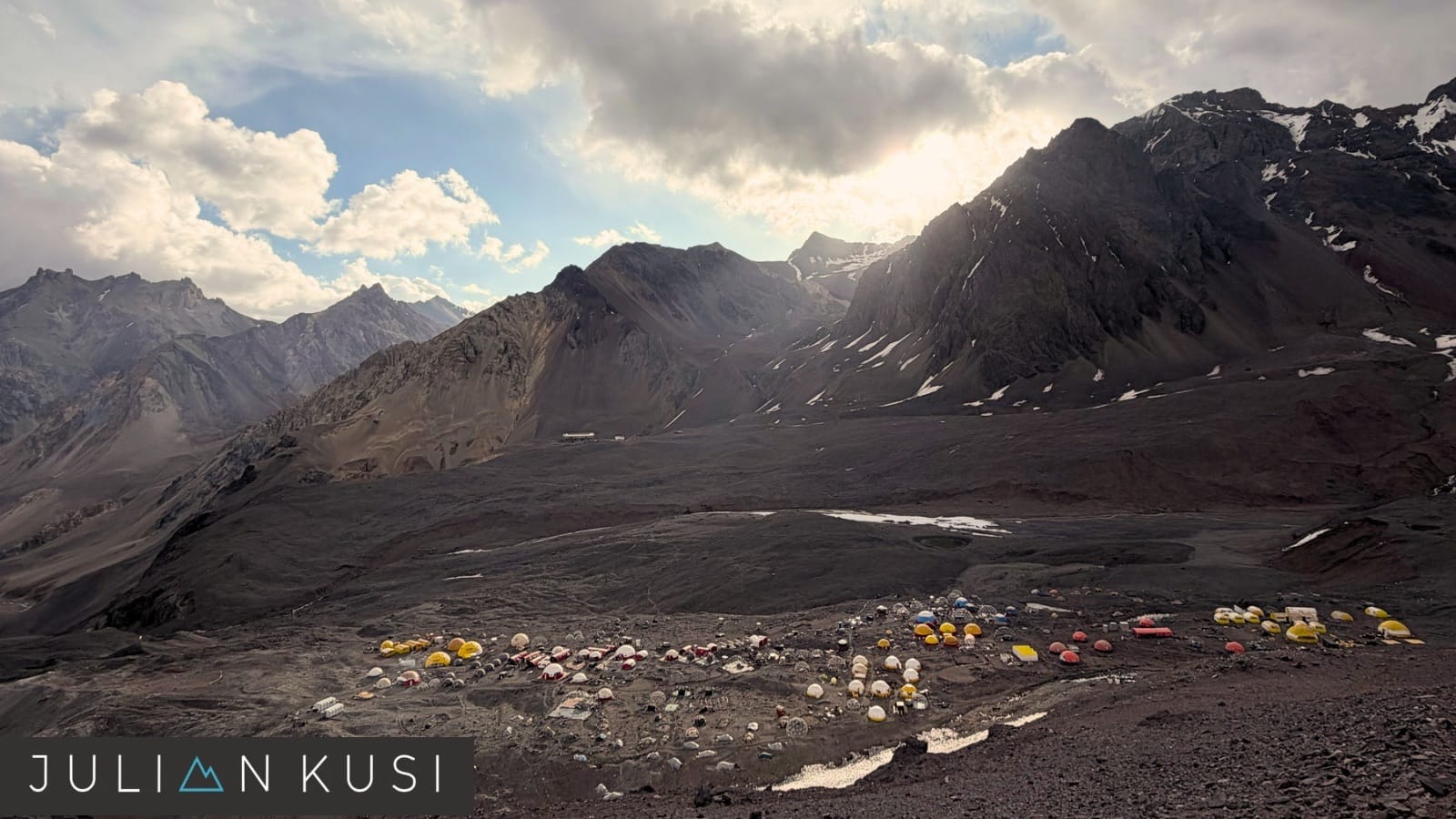
Not everyone who visits the Provincial Park comes to reach the summit. Besides the Aconcagua peak, there's the fantastic opportunity to experience high-altitude mountaineering by obtaining a Long Trekking Permit, which lasts for 7 days.
Date for the Long Trekking
This trek is available from December 1st to February 15th
Suggested Itinerary for the Long Trek (7 days)
Day 1: Arrival at Horcones and overnight stay at Confluencia (11,154 ft / 3,400 m). Distance: 4.5 miles / 7.3 km / 3 hours.
Day 2: Acclimatization hike to the impressive south face viewpoint at Plaza Francia (13,451 ft / 4,100 m). Estimated time: 7 hours total.
Day 3: Ascent to Plaza de Mulas (14,108 ft / 4,300 m) via Playa Ancha and Cuesta Brava. Distance: 11.2 miles / 18 km / 8 to 9 hours.
Day 4: Active rest and physical recovery day at base camp. Visit to Nautilus.
Day 5: Ascent of Cerro Bonete (16,568 ft / 5,050 m). Estimated time: 7 hours total.
Day 6: Suggested rest day, ideal as a backup plan in case of closed weather windows.
Day 7: Uninterrupted descent from Plaza de Mulas to the park entrance in Horcones. Distance: 15.5 miles / 25 km / 8 hours.
El Bonus Track: Ascenso al Cerro Bonete
In addition to reaching Plaza de Mulas, mountaineers with this permit take the opportunity to summit a spectacular nearby peak: Mt Bonete. At 5,050 meters (16,568 ft), it's the perfect challenge to test your altitude skills. From base camp, the summit of Bonete requires approximately 7 hours of technical effort.
Official Prices for long treks (Season 2025/2026)
For this permit, you must apply in person in the city of Mendoza. You can choose to go unassisted (pitching your own tent and cooking your own meals) or hire logistics from an authorized company, which interestingly lowers the cost of your state permit:
Option A: Unassisted (On your own)
Mendoza residents: ARS 80,000
Argentines: ARS 160,000
Latin Americans: USD 450
Foreigners: USD 540
Option B: Assisted (Hiring mule services, guide, etc.)
Mendoza residents: ARS 55,000
Argentines: ARS 110,000
Latin Americans: USD 320
Foreigners: USD 380
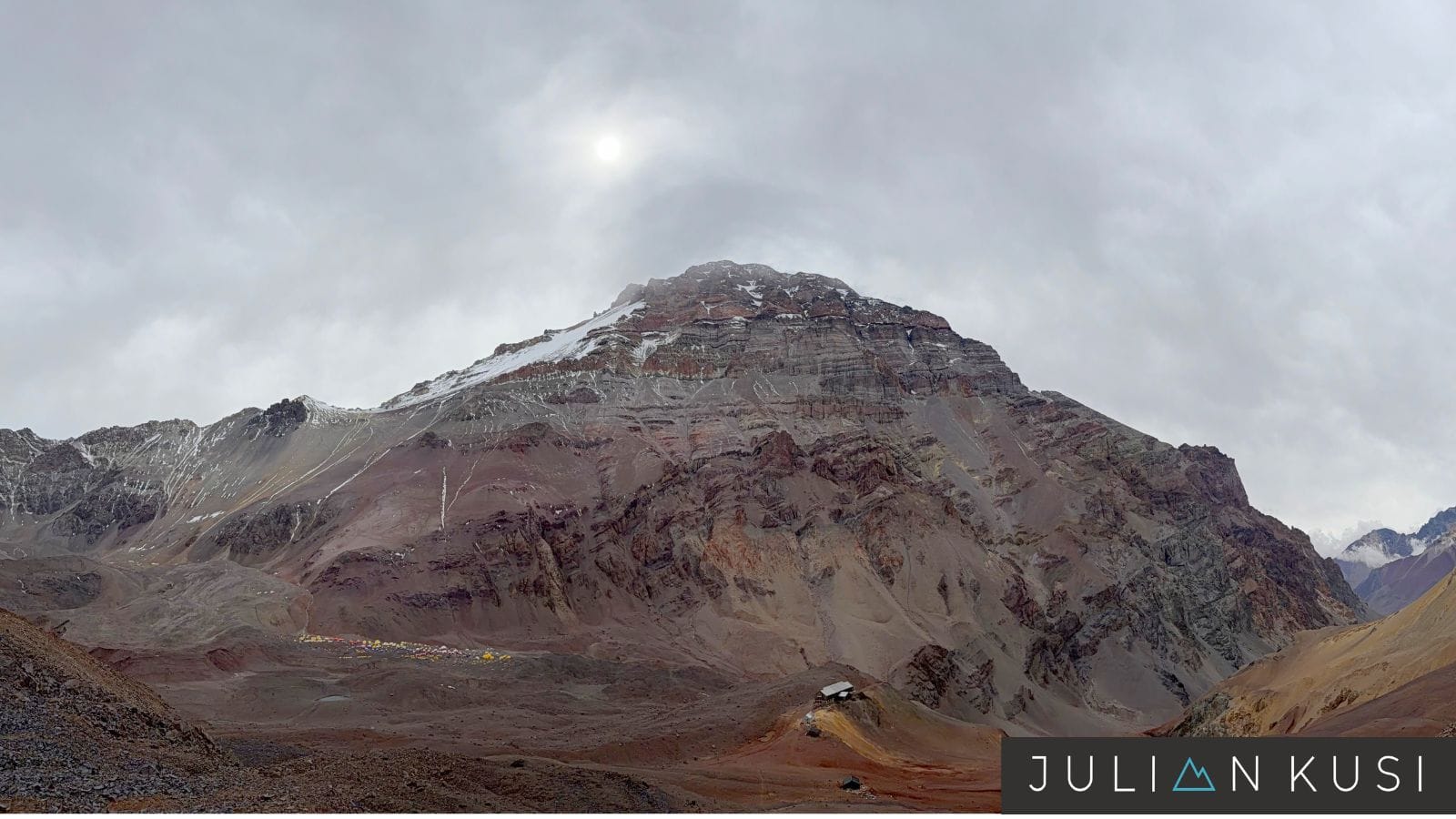
Map of Plaza de Mulas
Guide's Tips: Permits and Technical Equipment
Plaza de Mulas will subject you to one of the most extreme temperature swings of your life; the sun will scorch you at midday and the cold will chill you to the bone at night. Managing your layering system is non-negotiable.
To get here, you must obtain either a Climb Permit (20 days) or a Long Trekking Permit (7 days).
Remember that high-altitude evacuation insurance is mandatory to obtain your permit. I have complete confidence in Global Rescue and recommend them to my clients because of their proven track record in high-altitude situations.
Are you ready for Aconcagua?
Don't leave your expedition to chance. The mountain demands planning and the guidance of professionals who know its secrets. You can contact me directly for personalized advice through my official website.
 Julian Kusi
About the author
Julián Kusi is a professional mountain guide with 17 summits on the "Stone Sentinel." Based in Mendoza, he specializes in the technical logistics and safety of the Normal and 360 routes on Aconcagua.
With a distinctly international and bilingual profile, Julián offers advice in Spanish, English, and Mandarin Chinese, facilitating access to the mountains for expeditions from around the world. His approach combines the precision of a high-altitude expert with modern logistical management, focused on maximizing the chances of reaching the summit for your next expedition.
Are you planning your next challenge? Connect with Julián for personalized advice and expedition availability on his Instagram: @julian_kusi or directly through aconcagua.co.