
Complete Camp 1 Guide “Canada” on Aconcagua: Altitude and Acclimatization Strategy
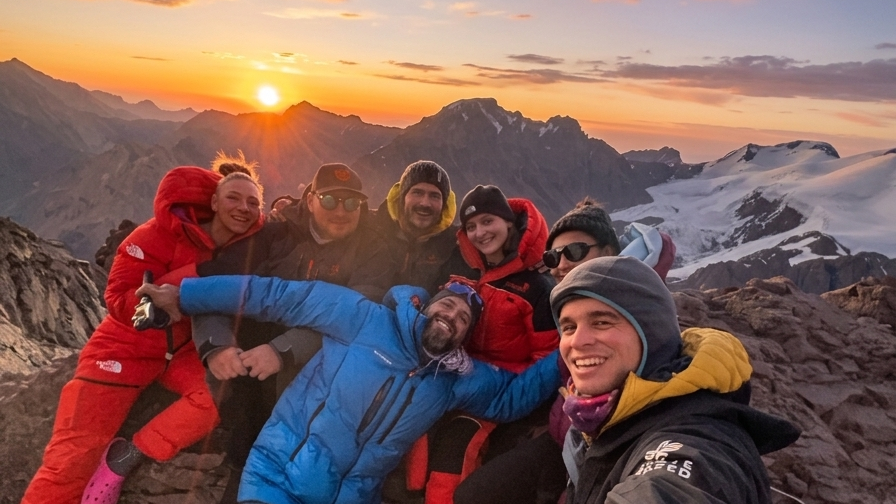
Establishing a Camp 1, technically known as Canada at 16,568 ft (5,050 m), is a crucial milestone for any expedition attempting to summit Aconcagua via the Normal Route. Having completed the necessary logistical transports days earlier, this final point marks the true beginning of the ascent to the higher camps.
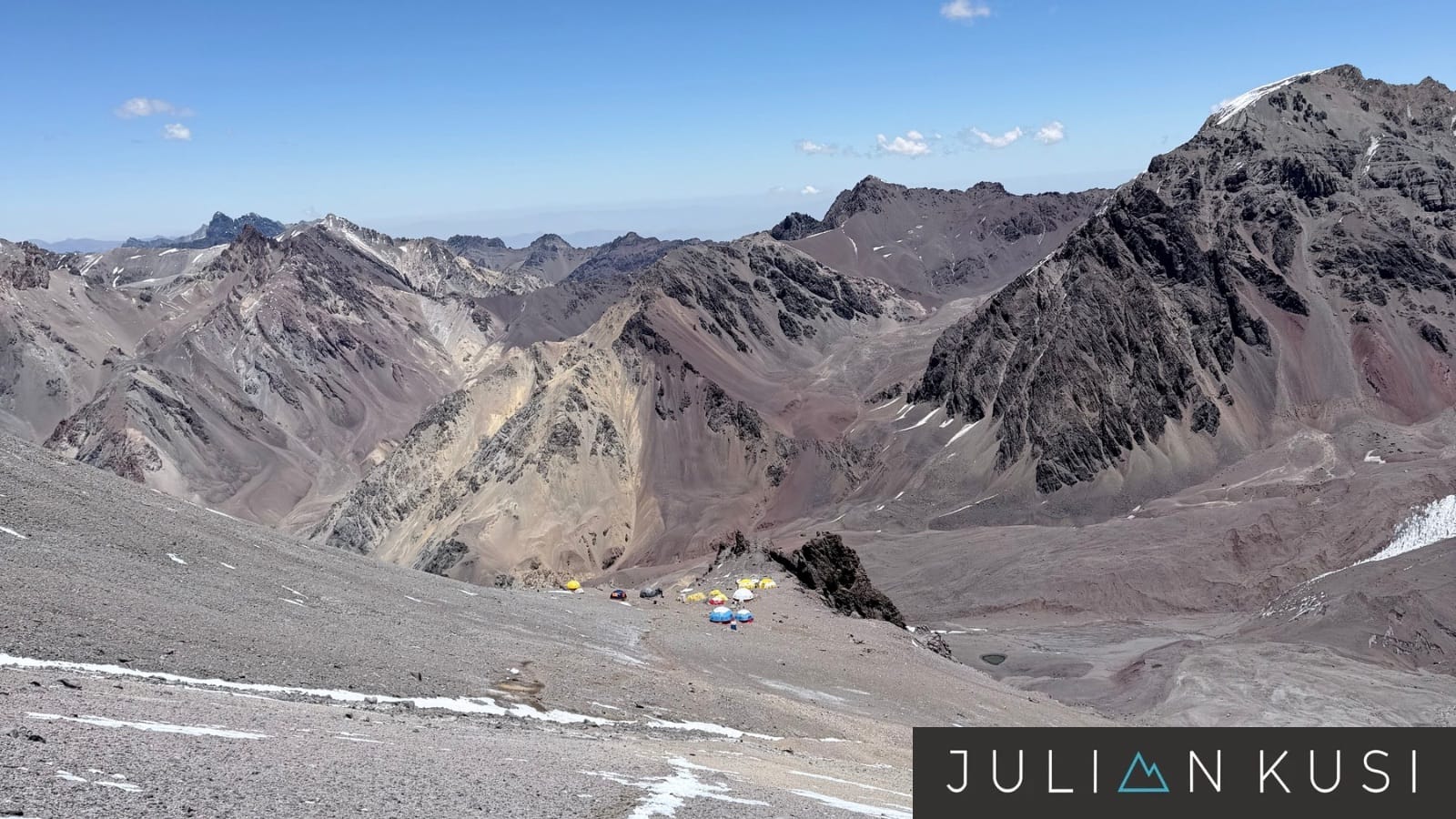
Although the physical space for tents is limited, Canada compensates climbers with a breathtaking and dizzying aerial view of the Plaza de Mulas base camp. It serves as a strategic and psychological vantage point before making the leap to Nido de Cóndores (Condor's Nest). In this environment, surrounded by imposing glaciers and colossal rock formations, the weather conditions of the Central Andes can change in minutes. Being greeted by a snowfall upon arrival is common; a stark reminder of the importance of physical endurance and technical preparation.
Technical Sheet Camp 1, Canada.
| Technical Parameter | Expedition Detail |
|---|---|
| Camp Name | Camp 1 - Canadá |
| Altitude | 16,568 ft / 5,050 m |
| Exact Coordinates | -32.6447305, -70.0428317 |
| Distance (from Plaza de Mulas) | 2.17 mi / 3.5 km |
| Average Ascent Time | 3 to 4h 30min (Acclimatization pace) |
Logistics and Carrying Strategy: The Secret to Success
On a professional and safe itinerary, your first contact with Camp 1 Canadá is never a definitive move. It is carried out as a gear-carry day, a fundamental pillar for efficient and progressive acclimatization.
The Dynamics of the Carry
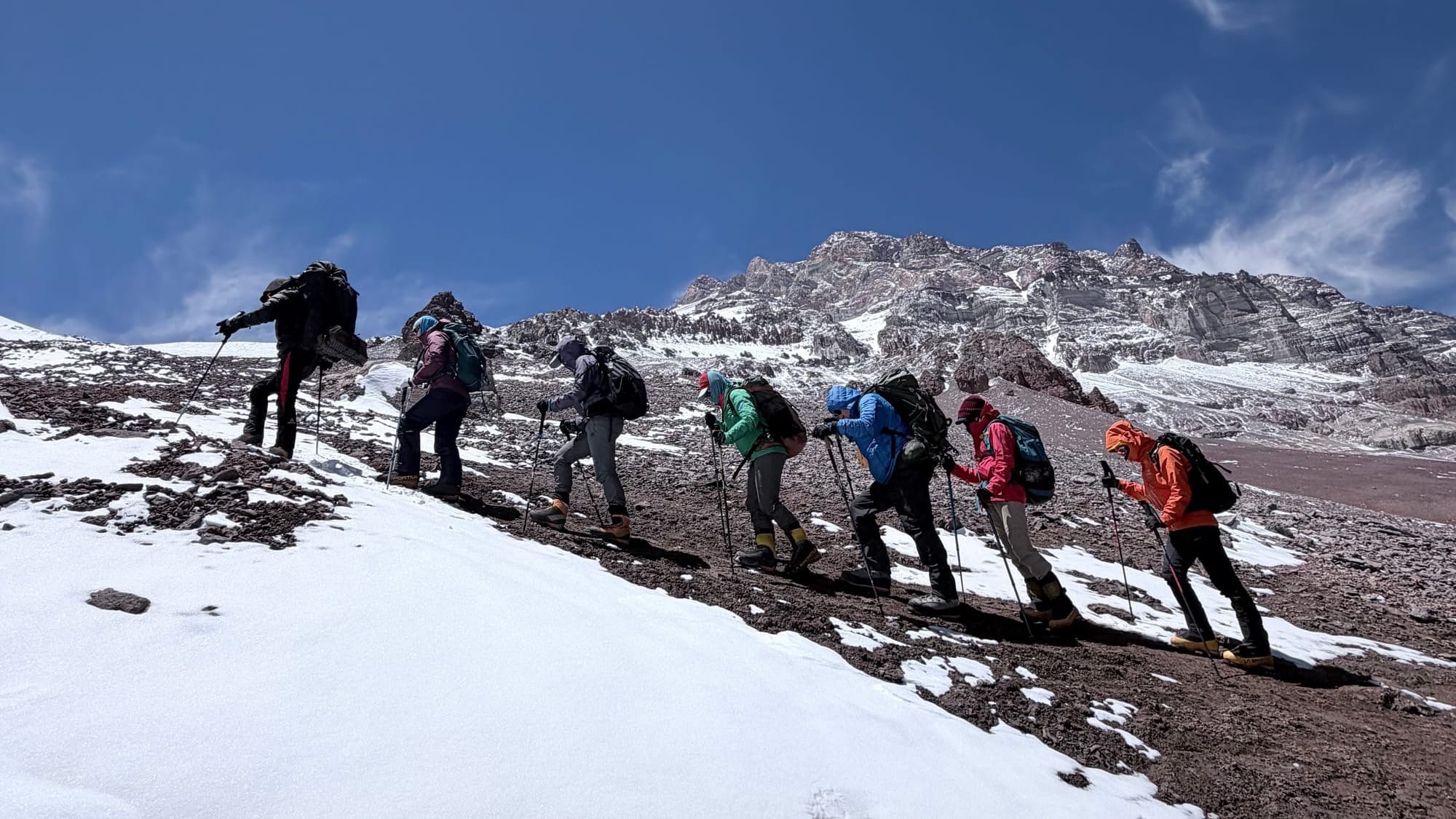
After arriving from Confluencia and taking a necessary rest day at Plaza de Mulas (14,300 ft / 4,360 m), you ascend to Canadá carrying a backpack of approximately 24 lbs /12 kg. During this trip, you move up the critical gear that will be used on summit day, as well as the high-altitude food for the following days. After caching the load, you descend to rest and sleep once again at base camp.
Clinical and Technical Benefits of the Carry to Canadá:
Breaking the altitude barrier
We break the 16,400 ft (5,000m) line for the first time, stimulating the production of red blood cells without wearing out the body by sleeping at altitude.
Material Testing
This is the exact moment when the expedition members use their double boots for the first time. This allows us to assess each person's experience, the fit, prevent early blisters, and measure the body's response to the technical weight on steep terrain.
Equipment Security
Although some mountaineers feel uneasy leaving their gear in Canada, respect between expeditions is the norm. As a golden rule of the mountains: always clearly label your belongings with your name and the date to avoid any logistical confusion with other groups.
This clinical evaluation is an essential filter to verify that the body is acclimatizing as effectively as possible. The park's doctors will monitor oxygen saturation and blood pressure, ensuring the body is ready to face the final days at altitude, which will be the most demanding and crucial of the entire expedition.
Resource Management and Survival in Canada
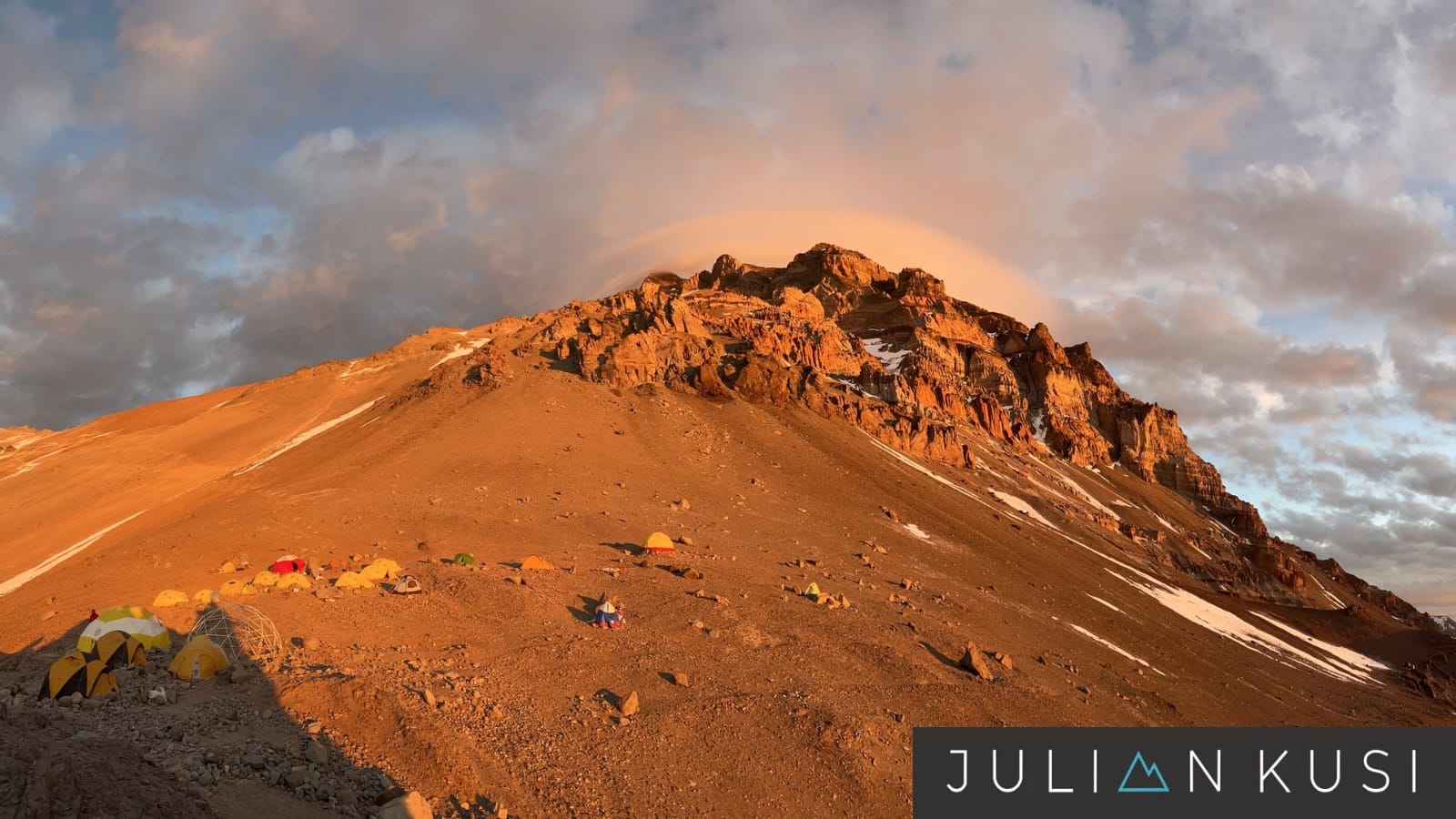
Canada is a rugged and challenging campsite. Here, climbers rely primarily on the shelter of their high-altitude tents for protection from the whiteout conditions and extreme cold. While you will find domes from various companies offering services at this camp, keep in mind that these are pre-arranged services; you cannot simply arrive unannounced and use their facilities. Camp 1 does not operate the same way as Plaza de Mulas Base Camp, so self-sufficiency is key. At this point, making informed decisions about your actual physical condition will determine whether you are fit to continue ascending to Nido de Cóndores.
Map of camp 1, Canada
The Critical Water Challenge
Water availability in Canada is variable and a critical logistical factor. Depending on seasonal conditions, a shortage of clean snow can be a real problem.
Strategy: Before leaving Plaza de Mulas, consult with guides and park rangers about the water flow in Canada. If the season is dry, you will need to carry liquid water directly from base camp. By carrying your water to Camp 1, you will know for yourself and be able to make better decisions before spending the night in Canada.
Waste Management and Zero Impact Protocol
Aconcagua Provincial Park applies strict regulations to preserve the environment. In Canada, human waste management is mandatory: The use of numbered plastic bags for fecal matter, provided upon entering the park, is required.
 Julian Kusi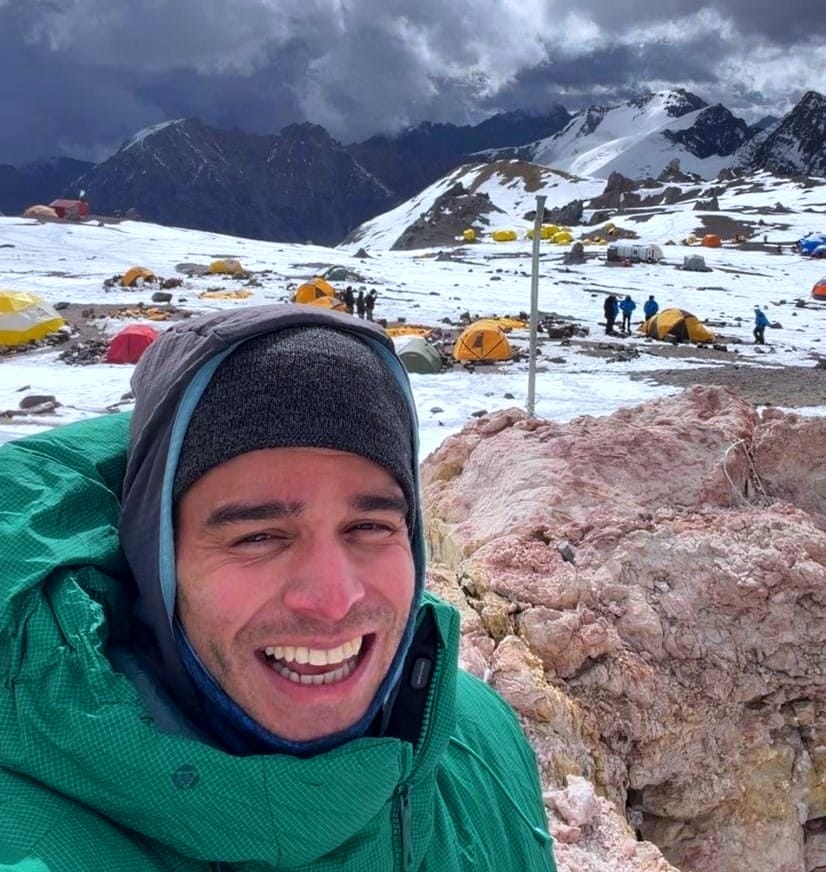
Remember that high-altitude evacuation insurance is mandatory to obtain your permit. I have complete confidence in Global Rescue and recommend them to my clients because of their proven track record in high-altitude situations.
Are you ready for Aconcagua?
Don't leave your expedition to chance. The mountain demands planning and the guidance of professionals who know its secrets. You can contact me directly for personalized advice through my official website.
About the author
Julián Kusi is a professional mountain guide with 17 summits on the "Stone Sentinel." Based in Mendoza, he specializes in the technical logistics and safety of the Normal and 360 routes on Aconcagua.
With a distinctly international and bilingual profile, Julián offers advice in Spanish, English, and Mandarin Chinese, facilitating access to the mountains for expeditions from around the world. His approach combines the precision of a high-altitude expert with modern logistical management, focused on maximizing the chances of reaching the summit for your next expedition.
Are you planning your next challenge? Connect with Julián for personalized advice and expedition availability on his Instagram: @julian_kusi or directly through aconcagua.co.