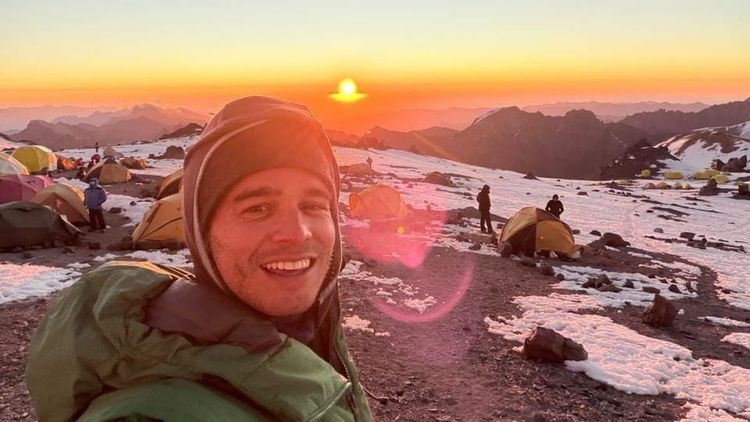
Nido de Cóndores Aconcagua: Definitive Guide to the Key Camp at 18044 ft
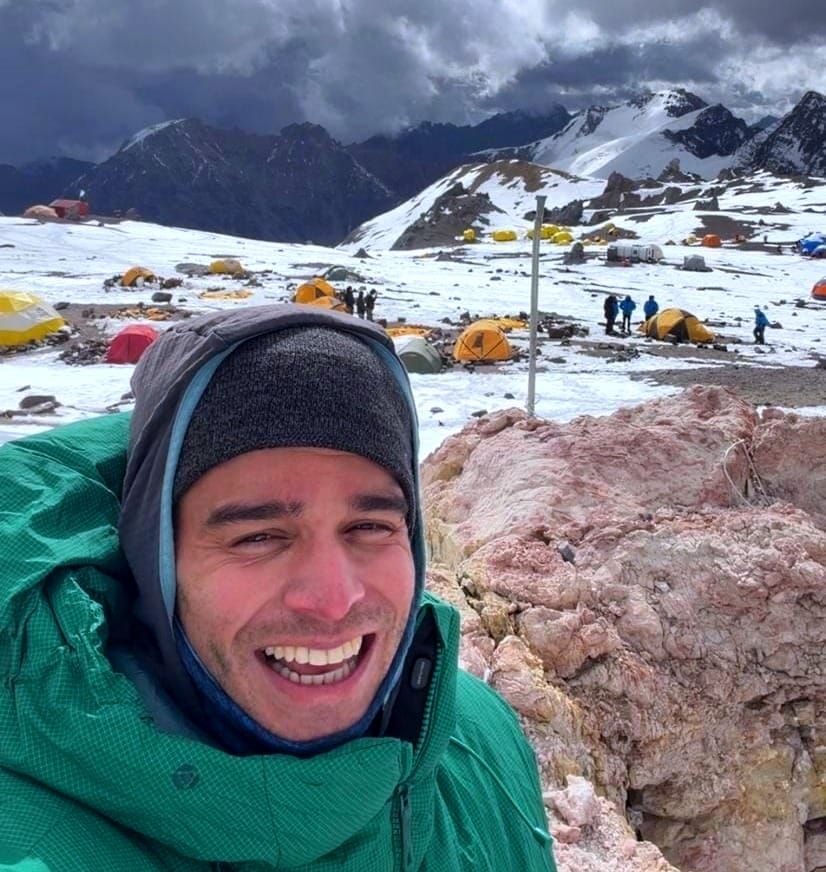
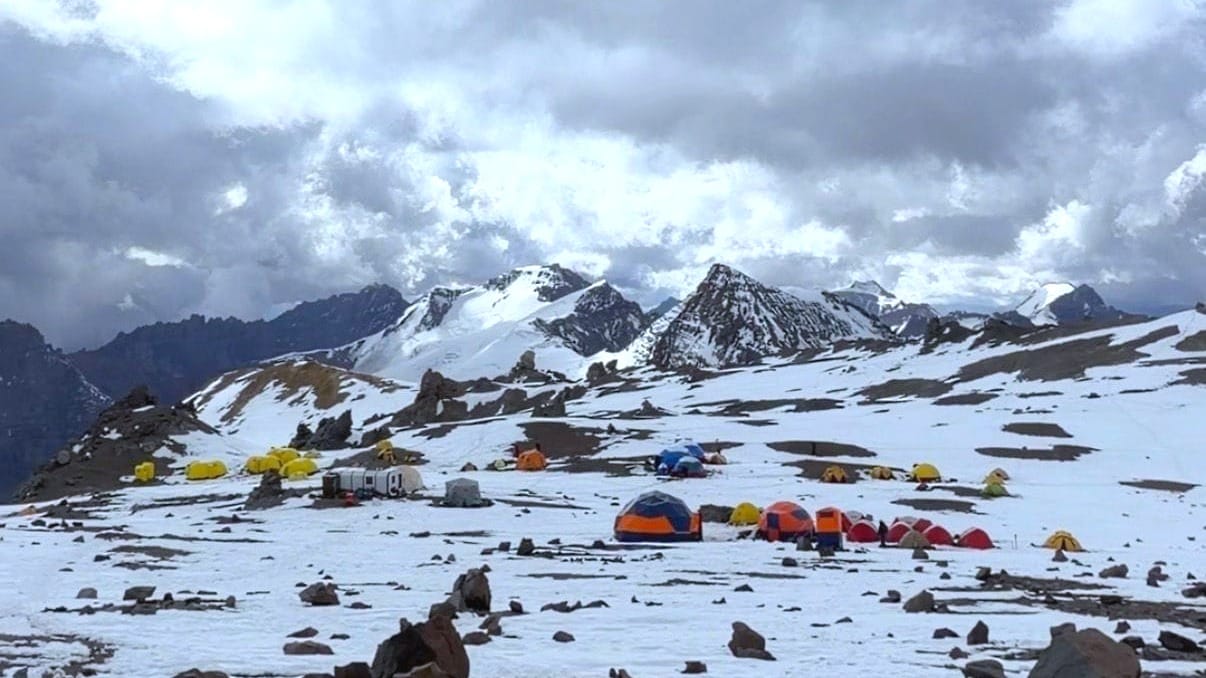
Nido de Cóndores, located at an altitude of 5,500 meters above sea level, is par excellence the most important high-altitude camp on Aconcagua. Unlike the higher camps, this place stands out for its massive flat area, which makes safely setting up dozens of tents easier, and an altitude where the body does not wear down as much.
Technical Specifications of Nido de Cóndores
| Parameter | Technical Detail |
|---|---|
| Name | Nido de Cóndores (Camp 2 - Normal Route) |
| Altitude | 18,044 ft / 5,500 m |
| GPS Location | 32°38'15"S / 70°01'22"W |
| Distance | 1.86 miles (+450 m elevation gain) from Camp 1 |
| Time | 3 to 4 hours from Camp 1 (Canadá) |
Park Ranger Station and Rescue Patrol (UPRAM):
A permanent team ensures the safety of mountaineers, coordinating check-ins and emergency logistical assistance.
High-Altitude Medical Service:
This camp features one of the highest medical clinics in the world, staffed by a trained doctor ready to help. However, a medical check-up is not mandatory. It is only performed if necessary, generally for climbers showing early signs of high-altitude pulmonary edema (HAPE), high-altitude cerebral edema (HACE), or who are simply not feeling well.
Emergency Helipad:
This is the highest point up to which rescue helicopters can regularly land on the mountain. For this reason, it is essential to verify that your medical evacuation insurance explicitly covers rescues up to 5,600 meters in altitude; if you experience a mishap higher up, this will be the closest extraction point.
Attempting the summit directly from Nido de Cóndores?
Some mountaineers with exceptional physical conditioning and perfect acclimatization choose to launch their final summit push from here, skipping Camp 3 (Cólera or Berlín). However, this is not recommended for everyone. It implies overcoming a brutal elevation gain of 1,462 meters in a single day, which requires extreme endurance. For the vast majority, the ideal strategy is to use Nido as a base to rest, sleep better, and then move to Camp 3 before pushing for the summit.
Water Collection
This camp features excellent snow deposits and even a natural meltwater lagoon located near the Rescue Patrol station, where it is common to source liquid water. To optimize logistics and avoid constant trips, the ideal approach is to use a 6-liter container to collect water and maintain a comfortable and secure reserve directly in your tent.
Extra Days and Weather Management
Expeditions to Aconcagua include reserve days to deal with storms or wait for good weather windows that allow for the summit push. Nido de Cóndores is, along with Base Camp, the ideal strategic site to spend these waiting days. Due to the extreme physical toll caused by the altitude, staying stranded or spending extra days at Camp 3 should be avoided at all costs.
 Julian Kusi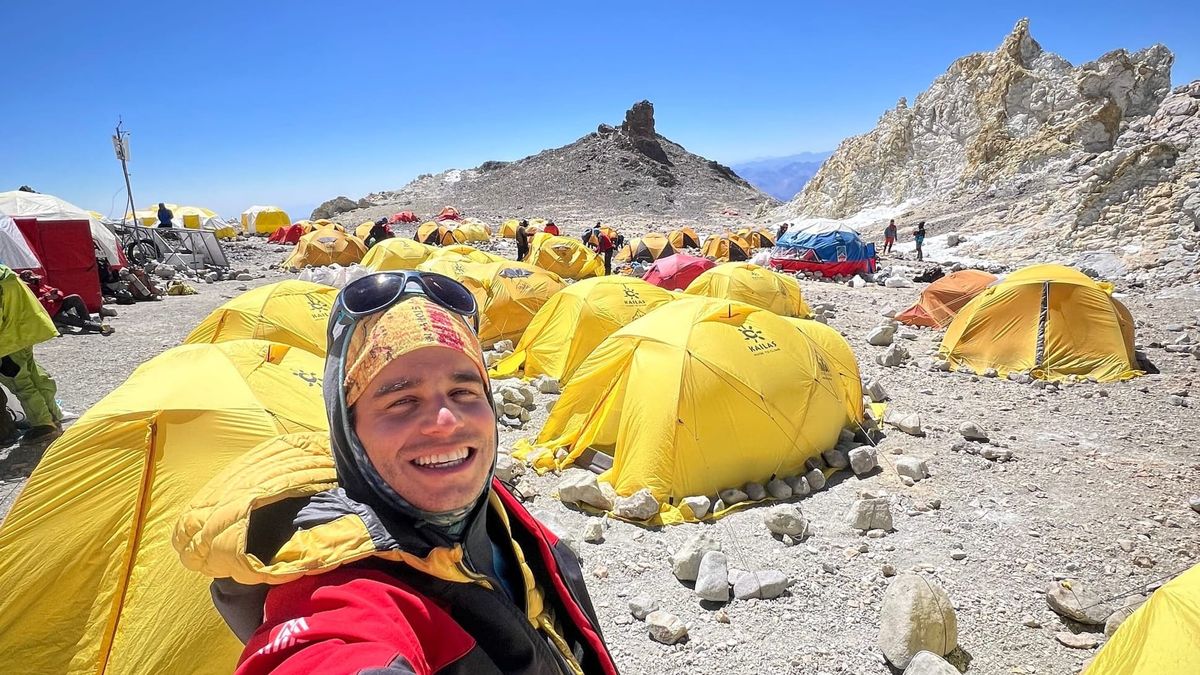
Remember that high-altitude evacuation insurance is mandatory to obtain your permit. I have complete confidence in Global Rescue and recommend them to my clients because of their proven track record in high-altitude situations.
Are you ready for Aconcagua?
Don't leave your expedition to chance. The mountain demands planning and the guidance of professionals who know its secrets. You can contact me directly for personalized advice through my official website.
About the author
Julián Kusi is a professional mountain guide with 17 summits on the "Stone Sentinel." Based in Mendoza, he specializes in the technical logistics and safety of the Normal and 360 routes on Aconcagua.
With a distinctly international and bilingual profile, Julián offers advice in Spanish, English, and Mandarin Chinese, facilitating access to the mountains for expeditions from around the world. His approach combines the precision of a high-altitude expert with modern logistical management, focused on maximizing the chances of reaching the summit for your next expedition.
Are you planning your next challenge? Connect with Julián for personalized advice and expedition availability on his Instagram: @julian_kusi or directly through aconcagua.co.