
Definitive Guide to Camp 3 Cólera (5,950 m): The Last Step to the Summit of Aconcagua
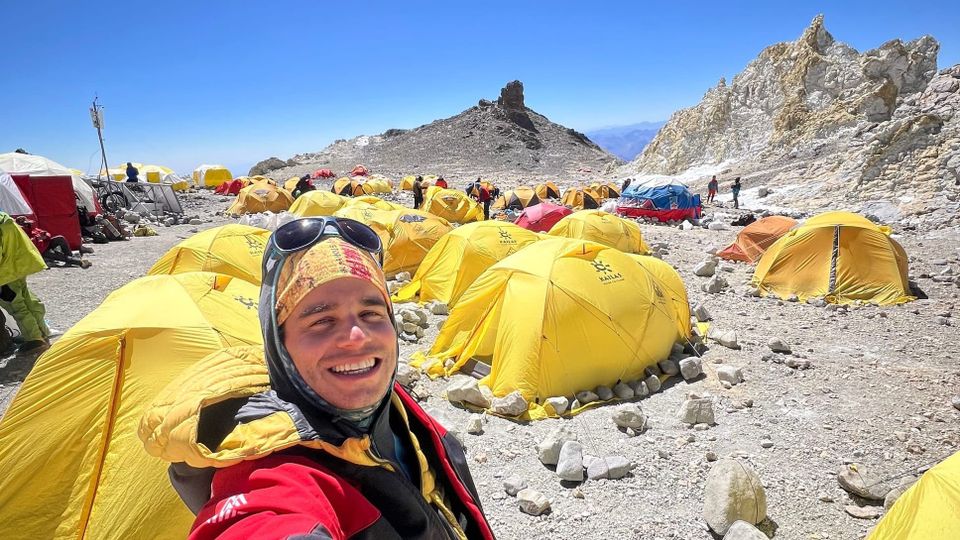
For mountaineers seeking the summit of the highest mountain in the Americas, there is a geographical and psychological point that defines the success of the entire expedition. I am talking about Campo Cólera, the imposing Camp 3 of Aconcagua Provincial Park. Situated at an altitude of 5,950 meters (19,520 feet), this strategic campsite is the final frontier before tackling the mythical 6,962 meters of the summit.
Below, I present the technical, logistical, and safety analysis of this crucial camp, designed based on 11 years of experience guiding expeditions on the colossus of the Americas.
Cholera Camp Technical Datasheet
| Parameter | Technical Detail |
|---|---|
| Camp Name | Camp 3 (Cólera) |
| Official Altitude | 5,950 m / 19,520 ft |
| Approximate GPS Location | -32.636505, -70.018045 |
| Distance from Previous Camps | 3.2 km (from Nido de Cóndores) 2.6 km (from Camp 3 Guanaco) |
| Average Ascent Time | 3h 15m (from Nido de Cóndores) 2h 58m (from Camp 3 Guanaco) |
Introduction: The Portal Between Two Worlds
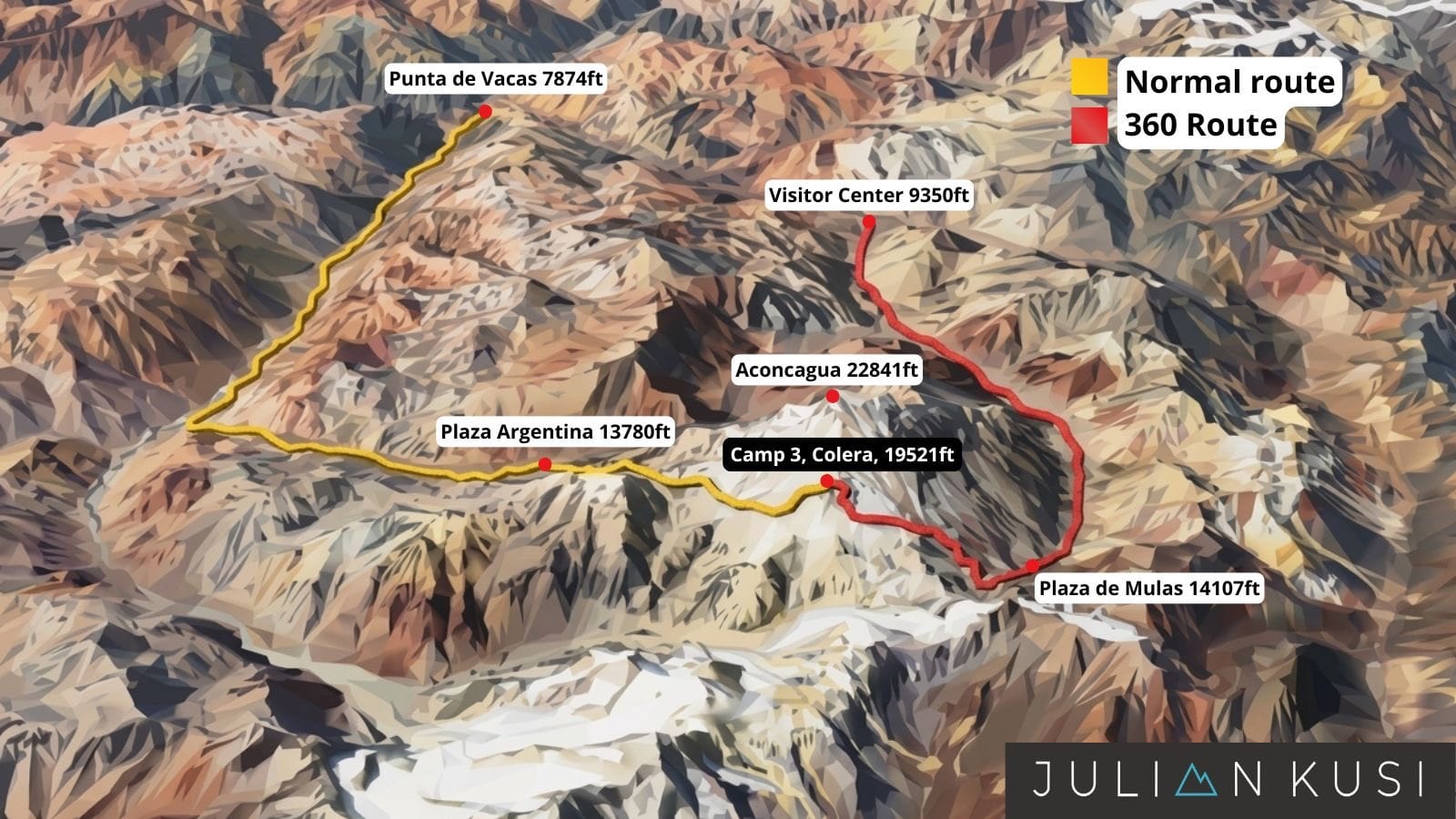
Cólera is not just any camp. Its mystique lies in its strategic geography: it is the junction point where the Normal Route (which ascends through the Horcones Valley, passing by Plaza de Mulas) and the demanding 360° Route (coming from Punta de Vacas and Plaza Argentina) converge.
Settling at nearly 6,000 meters of altitude means entering the body's "disturbance zone." The landscape becomes strictly mineral and the views are, without exaggeration, colossal. From here, you visually dominate a large part of the Andes Mountain Range, spotting snow-capped peaks that stretch into infinity. However, the visual beauty contrasts drastically with the hostility of the environment. It is the last place where mountaineers pitch their tents; a space of extreme physical and mental preparation before facing the final assault.
The Standard Stay Plan
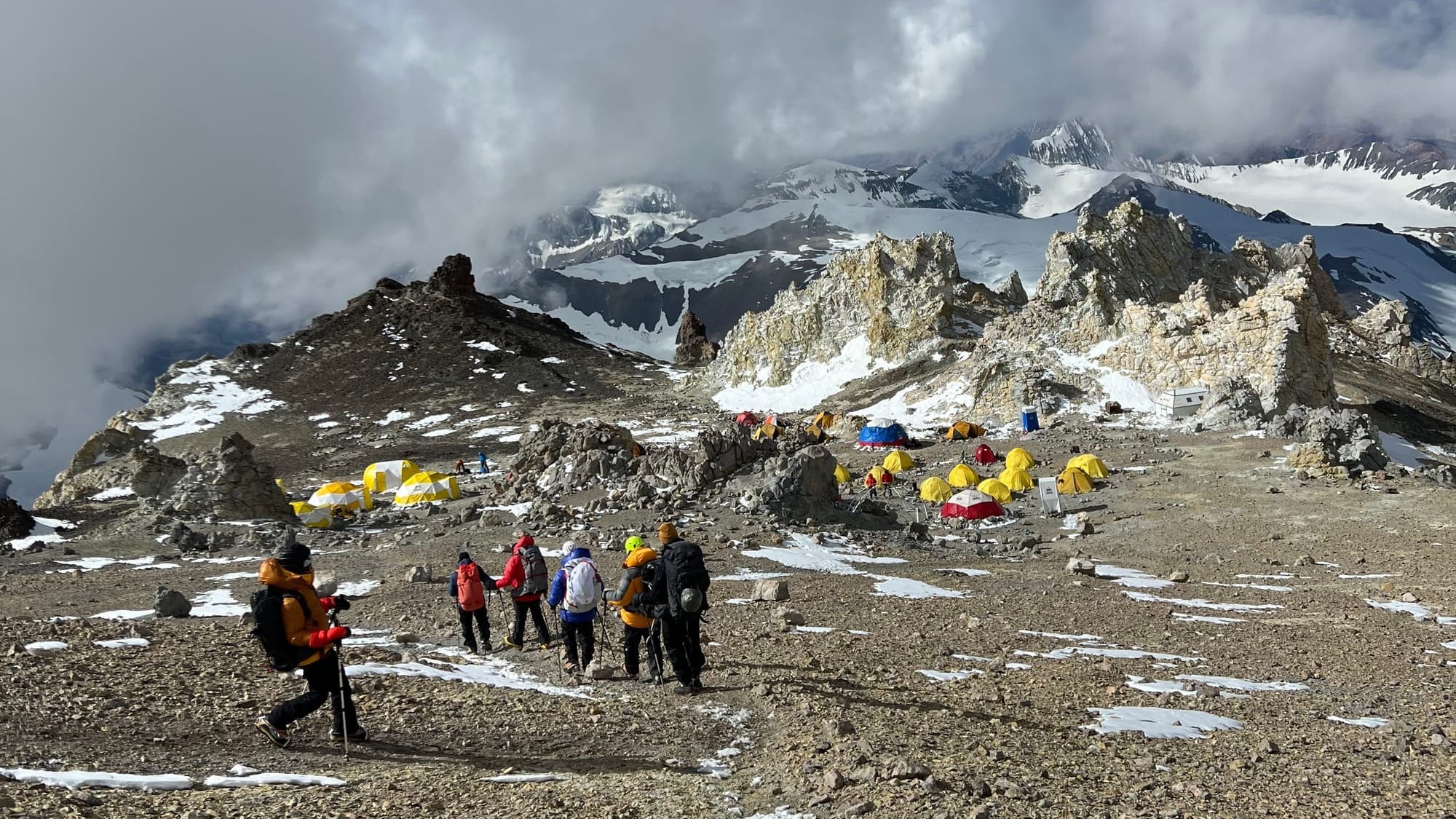
Under a professional strategy, the ideal itinerary contemplates spending two nights in Cólera:
1 First night: Arrival from the lower camp (Nido de Cóndores or 3 Guanacos), a quick dinner, massive hydration, and rest to head out for the summit in the early morning (normally at 5 AM).
2 Second night: Return from the summit attempt. The body arrives at the limit of physical exhaustion, so spending this second night here is vital to safely recover warmth and energy before starting the definitive descent to the base camp. (Note: On rare occasions, climbers in excellent physical condition who come down early from the summit choose to pack up and continue descending on the same day, but this should never be your initial plan).
Where does the name "Cólera" come from?
There are three very strong theories in the mountaineering world that explain the peculiar naming of this camp at 5,950 meters. All of them combine the hostility of the environment with the physical suffering of those who inhabit it:
The Mountain's Anger (Cólera):
The wind in this sector usually blows with extreme violence and deafening gusts. Those who have endured storms there claim that you can feel the "cólera" (wrath) or the unleashed fury of Aconcagua mercilessly battering the tents.
Extreme Fatigue and Irritability:
Due to hypoxia (lack of oxygen) and extreme cold, the nervous system suffers severe wear and tear. It is very common for mountaineers to experience a state of absolute exhaustion, dizziness, and, above all, a marked irritability and anger (cólera) given the enormous difficulty of performing any basic task.
The "Cholera" Epidemic from Sulfuric Water:
The soil at this camp is very peculiar: it has a yellowish color and a strong sulfur smell. On occasions, if there is not much snow, you might have to melt water mixed with this mineralized sediment. The result is immediate: intoxication, diarrhea, and severe stomach distress at high altitude. Many claim that the camp earned its name by making a direct play on words with the disease cholera (cólera in Spanish), due to the physical decomposition of people during expeditions.
Location Map: Cholera Camp
The "Elena" Refuge: Safety and Critical Information
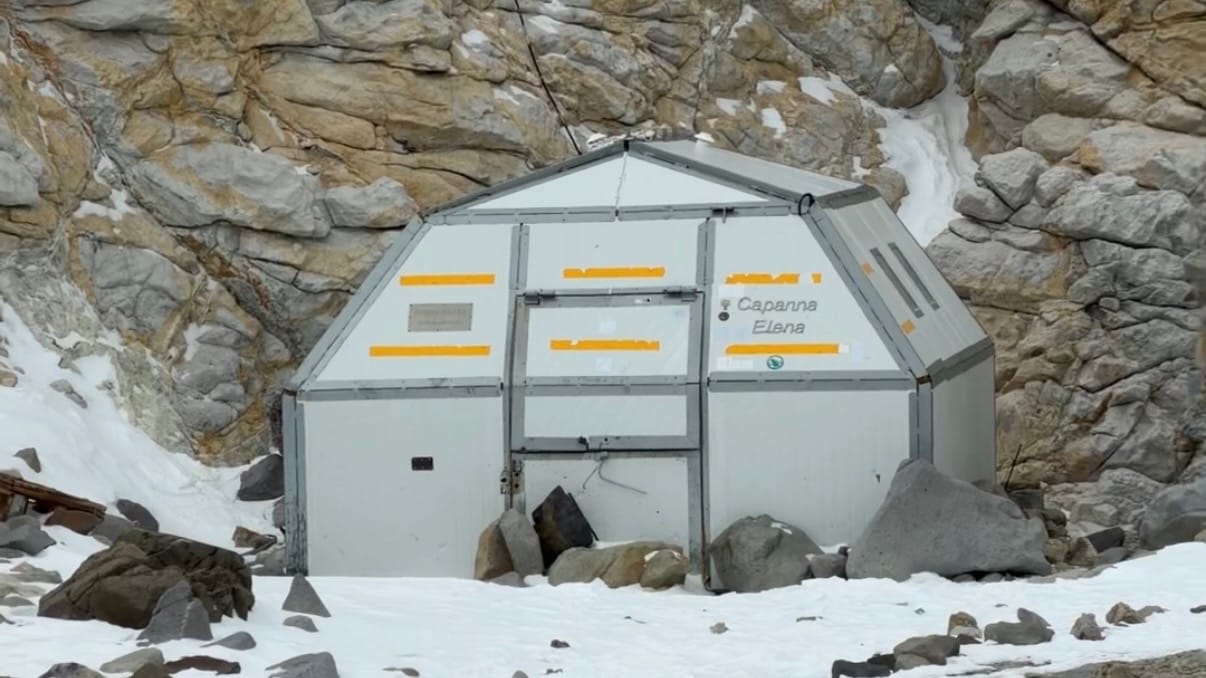
Located at 5,950 meters above sea level, in the Cólera campsite, lies the "Elena" Refuge. While it is cataloged as one of the highest mountain huts on the continent, it is not the highest of all.
It was inaugurated in January 2011 and built in honor of the Italian climber Elena Senin, who unfortunately lost her life after reaching the summit of Aconcagua and becoming trapped by a severe storm. Its construction was a joint effort and a huge act of solidarity between the mountaineering community, various institutions, and Elena's own family, with the primary objective of offering support in extreme situations and serving as an operational base for the Park's rescue teams.
 Julian Kusi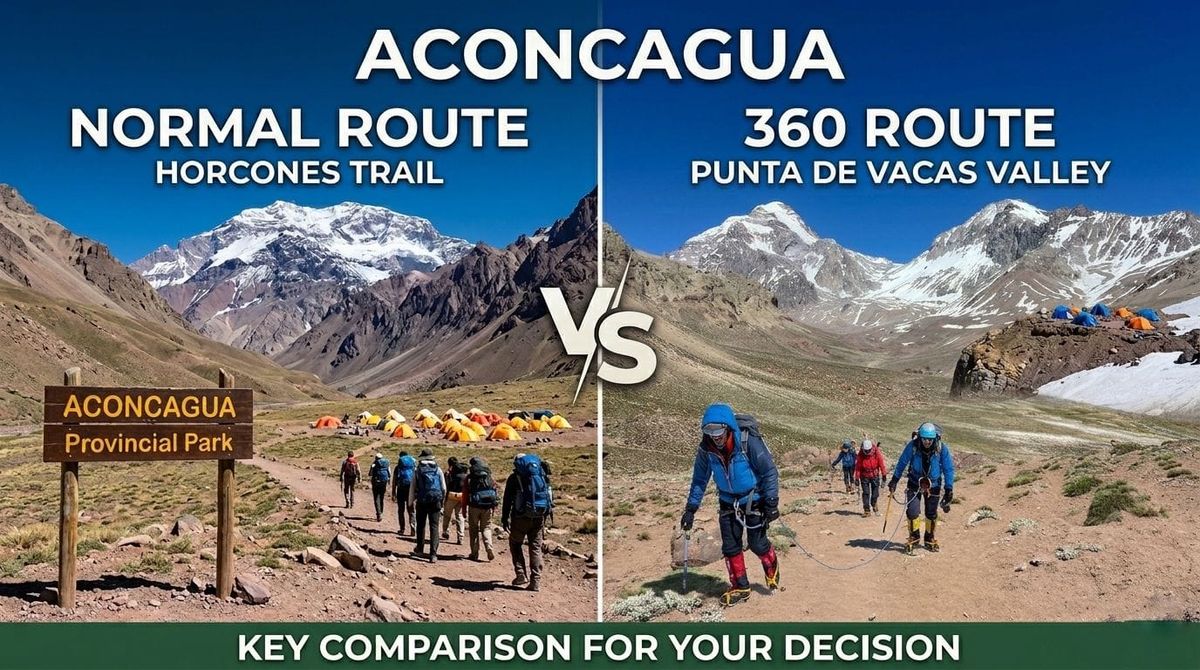
Remember that high-altitude evacuation insurance is mandatory to obtain your permit. I have complete confidence in Global Rescue and recommend them to my clients because of their proven track record in high-altitude situations.
Are you ready for Aconcagua?
Don't leave your expedition to chance. The mountain demands planning and the guidance of professionals who know its secrets. You can contact me directly for personalized advice through my official website.
About the author
Julián Kusi is a professional mountain guide with 17 summits on the "Stone Sentinel." Based in Mendoza, he specializes in the technical logistics and safety of the Normal and 360 routes on Aconcagua.
With a distinctly international and bilingual profile, Julián offers advice in Spanish, English, and Mandarin Chinese, facilitating access to the mountains for expeditions from around the world. His approach combines the precision of a high-altitude expert with modern logistical management, focused on maximizing the chances of reaching the summit for your next expedition.
Are you planning your next challenge? Connect with Julián for personalized advice and expedition availability on his Instagram: @julian_kusi or directly through aconcagua.co.