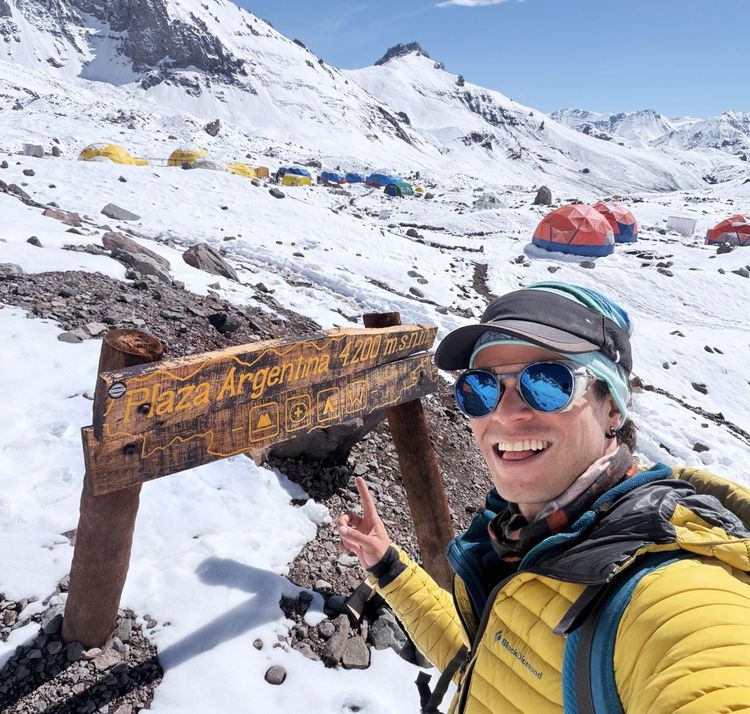
Plaza Argentina: The Strategic Heart of the 360 Route and Polish Glacier
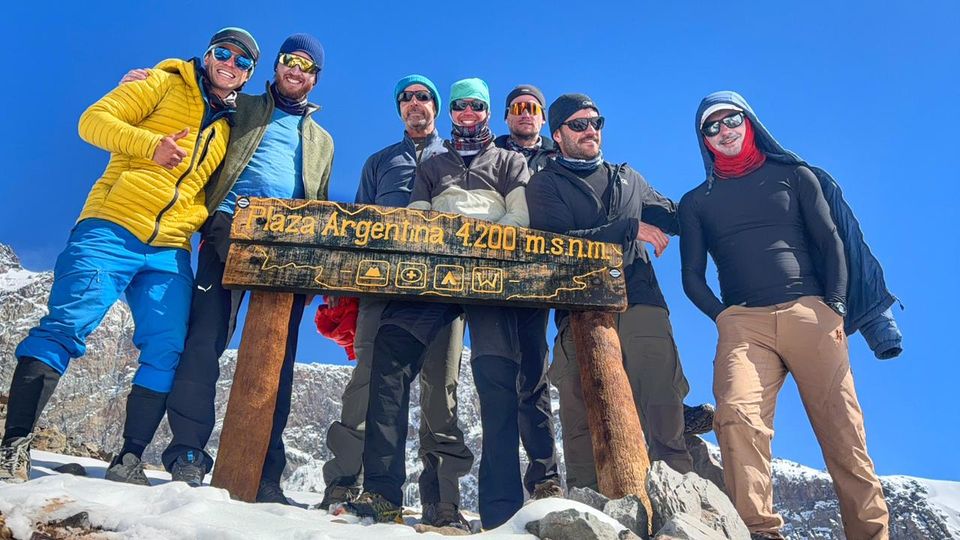
Located at 4,200 meters (13,780 feet), it is the point where the heavy logistics of the mules end and the true human challenge against altitude begins.
| Parameter | Technical Detail |
|---|---|
| Name | Plaza Argentina Base Camp |
| Altitude | 4,200 m / 13,780 ft |
| Location (GPS) | -32.646667, -69.943910 |
| Distance (Final section) | 12.5 km (From Casa de Piedra) |
| Estimated time | 6:00 h - 7:30 h |
Logistics and Services at Base: Life at 13780 ft
Reaching Plaza Argentina requires a three-day approach through the Vacas and Relinchos valleys. Once there, the camp becomes a small "canvas city" with essential services for survival and performance:
Medical Services:
Mandatory blood pressure and oxygen saturation checks for all mountaineers before continuing the ascent. On this route, a single mandatory medical check-up is performed during the rest day (after portaging to Camp 1) to evaluate proper acclimatization to the altitude.
Wi-Fi y Radio VHF:
Wi-Fi connectivity available (depending on the logistics company) and VHF radio to coordinate with the agency, Park Rangers, and the Rescue Patrol.
For unguided ascents:
The use of GPS and a satellite communication device (such as InReach or SPOT) is indispensably recommended to issue emergency alerts in remote areas.
High-Altitude Gastronomy:
- Food and Cold Chain: Providing companies offer dining domes with balanced nutrition, key to recovering calories lost after the 12.5 km trek from Casa de Piedra. There is a false myth that, due to being in a remote location, fresh foods like meat cannot be preserved. The reality is that the camps of large companies have electrical systems and refrigerators that guarantee the cold chain perfectly. There is no need to claim to be a vegetarian if you are not.
- Dietary Restrictions: If you suffer from celiac disease, diabetes, or follow a strict vegan or vegetarian diet, the mountain is prepared. However, it is mandatory to notify these restrictions before starting the expedition in Mendoza. This way, logistics can coordinate specific menus before loading the cargo onto the mules.
Park Rangers and Mandatory Check-in:
When entering through the Vacas slope, in-person registration is a mandatory step to enable your ascent. You must complete a formal check-in with the park rangers both upon arriving at Pampa de Leñas and when settling in at Plaza Argentina. A crucial detail for your itinerary: although you will see the shelter structure at Casa de Piedra, there has been no park ranger presence there for years, so all control bureaucracy is concentrated in the other two camps.
Helicopter Operations:
Plaza Argentina is an evacuation and aerial logistics hub that features two operational helipads. The helicopter service at this base is multifunctional: it manages the transport of private passengers, the relief of park rangers and medical staff, the movement of heavy cargo for companies, and, fundamentally, rapid medical evacuation in case of an emergency.
Interactive Map of Plaza Argentina
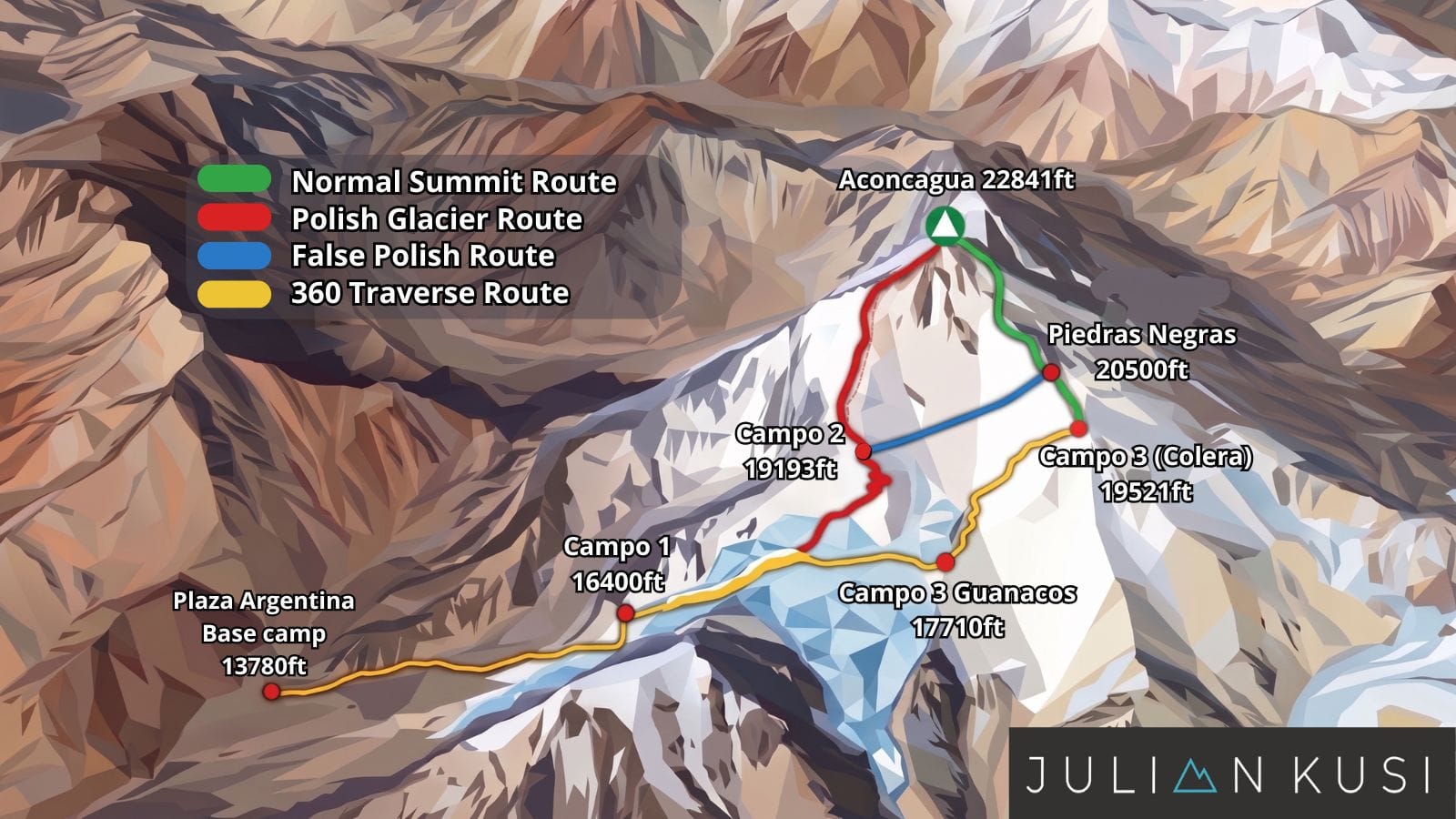
Master Routes: From the 360 to the Polish Glacier
Plaza Argentina is the nerve center of 3 of Aconcagua's most exciting routes:
1. The 360 Route (Vacas Integral)
It is the preferred option for mountaineers looking for a less technical ascent, as it presents a similar difficulty to the Normal Route. It is accessed through the Vacas Valley, establishing the base camp at Plaza Argentina. The itinerary includes staying overnight at Camp 1, Camp 2 (3 of Guanacos), and Camp 3 (Cholera) before making the summit attempt. The descent is carried out via the Normal Route toward Plaza de Mulas and the Horcones Valley. This circular traverse allows climbers to experience different faces of the mountain, offering a complete landscape and spiritual perspective of Aconcagua.
2. Polish Glacier
From Plaza Argentina, you ascend through Camp 1 to reach Camp 2, located right at the foot of the imposing Polish Glacier (important: do not confuse this location with the Camp 2 called "3 de Guanacos"). This route requires advanced ice climbing skills, as it features snow slopes and seracs that test the mountaineer's technique and grit.
3. False Polish Route (False Polish Traverse)
It follows the same approach as the Polish Glacier route but, from Camp 2 (the glacier one, do not confuse with "3 de Guanacos"), it detours into a traverse that connects with the Normal summit Route, reaching the Piedras Negras area at around 6,250 m or the Independencia refuge at around 6,400 m.
Guide's Tips: Permits and Preparation
As a professional with 11 years of leading groups, my primary advice is managing anxiety. Plaza Argentina is a comfortable place, but the air is already noticeably thinner.
📄 Ascent Permits and Process
Keep in mind that the ascent permit for the Plaza Argentina route is different and is usually more than 20% more expensive than that of the Normal Route.
💧Hydration and Nutrition at Altitude
Although the climb through this sector is more progressive and ideal for good acclimatization, dehydration is a silent enemy.
- The Daily Goal: You must force yourself to drink between 4 and 5 liters of fluid per day.
- Water Treatment: In Plaza Argentina, the water comes entirely from melting ice. It is not mineralized and can contain bacteria, so you must always filter it or use purifying tablets to avoid gastrointestinal problems.
- Smart Mineralization: Since meltwater does not provide minerals, it is essential to "dress" it. Always add soups, tea, or powdered juices so the body assimilates it correctly.
🗺️ Descent Strategy (The real objective)
- The Summit is Not the End: Beyond trying to crown the summit, your most important strategic objective is to reach Camp 3 and descend via the Normal Route.
- Why Avoid Returning: The Normal Route down is much shorter. Attempting to retrace your steps through the Quebrada de los Relinchos and Punta de Vacas after the physical exhaustion of the summit is a serious mistake: it is an extremely long, leg-breaking, and highly draining journey.
- Required Experience: Legally, a summit history is not required to obtain the permit. However, for technical variants like the Polish Route, real experience is a matter of vital safety, not bureaucracy. Do not be overconfident.
 Julian Kusi
Remember that high-altitude evacuation insurance is mandatory to obtain your permit. I have complete confidence in Global Rescue and recommend them to my clients because of their proven track record in high-altitude situations.
Are you ready for Aconcagua?
Don't leave your expedition to chance. The mountain demands planning and the guidance of professionals who know its secrets. You can contact me directly for personalized advice through my official website.
About the author
Julián Kusi is a professional mountain guide with 17 summits on the "Stone Sentinel." Based in Mendoza, he specializes in the technical logistics and safety of the Normal and 360 routes on Aconcagua.
With a distinctly international and bilingual profile, Julián offers advice in Spanish, English, and Mandarin Chinese, facilitating access to the mountains for expeditions from around the world. His approach combines the precision of a high-altitude expert with modern logistical management, focused on maximizing the chances of reaching the summit for your next expedition.
Are you planning your next challenge? Connect with Julián for personalized advice and expedition availability on his Instagram: @julian_kusi or directly through aconcagua.co.