
How Long Does it Take to Climb Aconcagua? A Time and Logistics Guide for Beginners 2026/2027
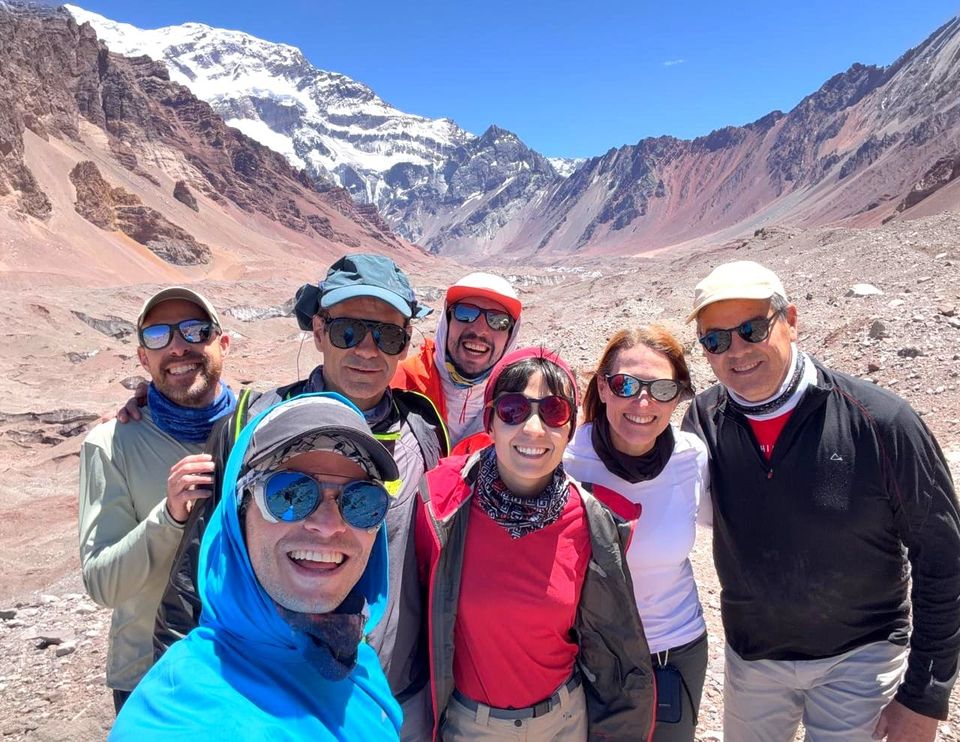
The imposing "Stone Sentinel," standing at 6,962 meters (22,841 ft), is not just the roof of the Americas, but a challenge where time is the most valuable resource. For Julián Kusi, a professional guide based in Mendoza, Argentina, and an expert in Aconcagua Provincial Park, the key to success is not speed, but respecting biological rhythms.
How many days are actually needed for the summit?
A standard expedition for an average mountaineer lasts between 15 and 20 days. This timeframe is essential for safe biological acclimatization. While "Express Expeditions" of 10 days exist for those who use supplemental oxygen or arrive pre-acclimatized, the conventional itinerary ensures the body adapts to extreme altitude, minimizing the risk of altitude sickness.
1. The Spectrum of Time: From World Records to Technical Reality
It is fundamental to distinguish between elite athlete performance and the process required for an amateur mountaineer.
2. Itinerarios y días claves: ¿Ruta Normal o Ruta 360?
| Feature | Normal Route | 360° Route |
|---|---|---|
| Total days | 15 to 17 days | 16 to 18 days |
| Difficulty | Technically similar | Technically similar |
| Focus / Time | Ideal for express expeditions or those seeking to summit in the shortest time possible. | Ideal for better acclimatization and exploring the different valleys and faces of Aconcagua. |
Regardless of the route, success starts with a solid logistical base. According to Julián Kusi's experience, the first steps are identical for everyone:
The Shared Start (Days 1 and 2)
- Day 1: Preparation in Mendoza: Exhaustive technical gear review (double boots, down parkas, etc.) and permit management.
- Day 2: Transfer to the Mountain: Travel from Mendoza to the Penitentes area to begin the approach.
Option A: The Normal Route (15 to 17 days)
This is the most direct path, entering through the Horcones Valley.
- Days 3-4: Approach and First Milestone: Trekking to Confluencia. A critical point here is the hike to the South Face viewpoint (Plaza Francia). Important: The first mandatory medical check occurs in Confluencia after reaching 4,000 meters.
- Day 5: Arrival at Base Camp: Reach Plaza de Mulas.
- Days 6-12: Altitude Cycle: Load carries are made to Camp 1 (Canadá). The second mandatory medical check is done at Plaza de Mulas on the rest day following the first carry.
- Day 13: Summit Day: Final push to the top.
- Days 14-15: Descent to base camp and return to Mendoza.
- Days 16-17: Extra days to be used in case of bad weather.
Option B: The 360° Route (16 to 18 days)
Ideal for total immersion in the landscape and more gradual acclimatization.
- Days 3-4: Approach via the Vacas Valley: Trekking through Pampa de Leñas and Casa de Piedra.
- Day 5: Base Camp: Arrival at Plaza Argentina, where the mandatory medical check for this route takes place.
- Days 6-13: High Altitude Cycle: Strategic carries to the high camps, eventually connecting with Camp Cólera for the final summit push.
- Day 14: Summit Day.
- Days 15-16: Descent via the Normal Route: Completing the circuit by descending through the opposite valley.
- Days 16-17: Extra days: Buffer days to be used in case of bad weather or specialized rest needs.
 Julian Kusi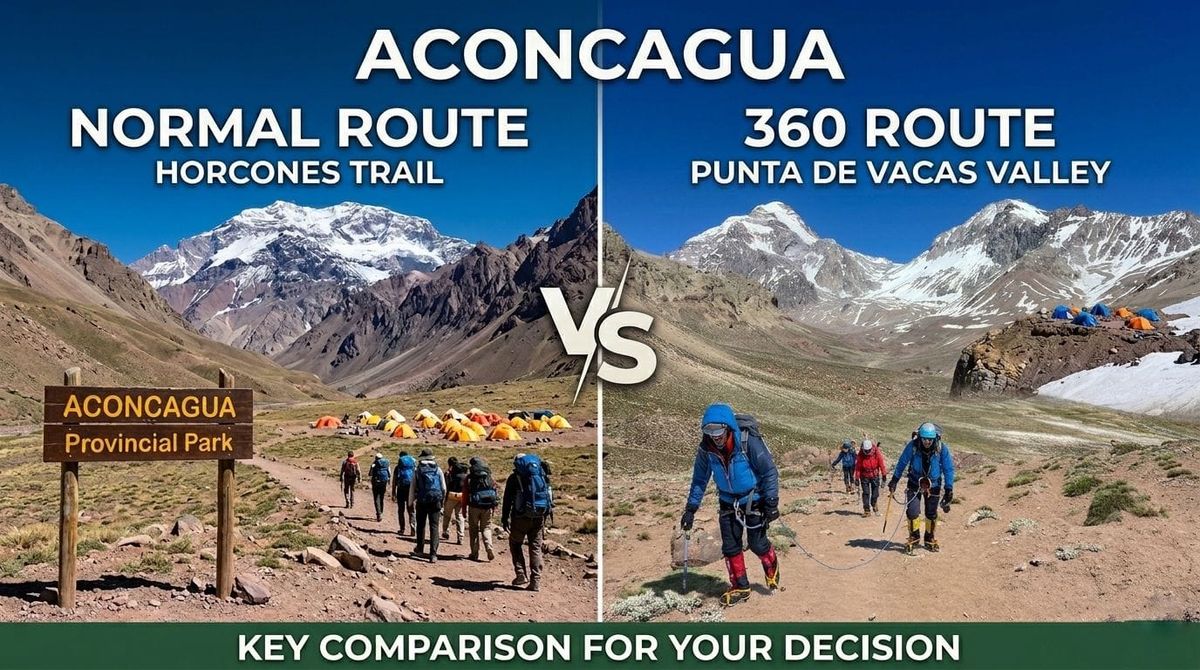
3. Can it be climbed in fewer days? (Express Expeditions and Oxygen)
For those seeking to optimize time, there are alternatives that require more complex logistics or a specific physical condition:
- Previous Acclimatization: Experienced mountaineers can reduce days if they come from climbing high-altitude peaks, such as Ojos del Salado (6,893 m). In these cases, duration depends on their endurance and private logistics.
- Express Expeditions (10 days): These programs are designed for both pre-acclimatized individuals and those planning to use supplemental oxygen on summit day.
4. Private Guide: Flexibility vs. Group Packages
If you believe you have the capacity to climb in fewer days or are looking for a tailor-made plan, the option is a Private Guide (1:1 Ratio).
- The Advantage of Flexibility: Unlike group expeditions that must follow a fixed itinerary for all members, a private guide allows the plan to be changed on the fly based on your performance, the weather (avoiding the Viento Blanco), or your rest needs.
- Logistics: Although oxygen use is not initially included, it can be coordinated as part of a personalized logistics plan.
15,000 USD.
5. Conclusion: Plan Your Success
Aconcagua is not a race; it is a marathon of physical and mental endurance. Whether you choose the patience of an 18-day expedition or the intensity of Express logistics, having an expert guide like Julián Kusi ensures that every day on the mountain is a safe step toward the summit.
Are you ready for the 2027 challenge?
Choosing between 10, 15, or 20 days depends on your experience, your body, and your goals. Contact me today for personalized advice through my official page and let's start planning your arrival at the top.
No matter which logistics you choose, mountain insurance is mandatory. Based on my experience and their quality of response, I highly recommend Global Rescue.
About the author
Julián Kusi is a professional mountain guide with 17 summits on the "Stone Sentinel." Based in Mendoza, he specializes in the technical logistics and safety of the Normal and 360 routes on Aconcagua.
With a distinctly international and bilingual profile, Julián offers advice in Spanish, English, and Mandarin Chinese, facilitating access to the mountain for expeditions from around the world. His approach combines the precision of a high-altitude expert with modern logistical management, focused on maximizing summit chances for the 2026/2027 season.
Are you planning your next challenge? Connect with Julián for personalized advice and expedition availability on his Instagram: @julian_kusi or directly through aconcagua.co.